You don’t need to see to travel, because essentially travelling is about people. You can go to the countries and look at the mountains and that is okay, but you need people, without the people you got no culture. That is what I am interested in, how people live different ways – Tony Giles
Tony Giles aka Tony the Traveller, 41, from England is born blind, partially deaf and he is travelling the world blind since 22 years. He visited 124 countries so far and his goal is to travel all spots of this planet. So officially 59 are missing, if you count the official countries.
I will never be done with travelling, my goal is to visit every country in the world. I am gonna keep travelling to the rest of my life. I love it, it is my passion.
I met him on lovely Travel Festival Leipzig, a platform for people that travel in a reflective conscious way. I talked with Tony about how he started to travel alone with no internet. About his beginnings in America, food in Japan, that blew him away, about bungee jumping, jumping out of airplanes and rafting.
We talked about different smells of the countries, he mentions a place that attacs all your senses and where everything smells like poo, he described how german cities smell, particularly Leipzig, which country he loves the most, visiting places off the beaten track, how he can afford all his travelling and biggest plan so far: hiking the Inca Trail of Machu Picchu in Peru in October 2020.
He wrote two books so far. “Seeing the world my way” and “Seeing the Americas my way”: Seeing the World My Way, describes his early journeys: out for adventure but consumed by alcohol as a method for dealing with his disabilities. His second ebook, Seeing the Americas My Way, is a more sober, yet more emotional tale. It highlights his challenges of confronting personal issues whilst travelling.
For his life challenge – hiking the Inca Trail – he raises money. One half is for his trip, the other half goes to the Galloways Society for the Blind. A charity based in Preston England, helping and supporting blind and visually impaired people.
“I was shaking and detoxing on my mat. Everything about me was horrid and everything around me was so beautiful.”
All ears on: Cole Chance.
She was an alcoholic and drug addict for many years. Nothing seemed to work to get rid of her addiction, until Cole dropped into a yoga class in a drug and alcohol treatment center. She did not stop with her self-destructive behavior, but whenever there was a moment of sobriety, she did some asanas to get into more contact with herself. Her life started to change in small steps, back and forth: Imagine her drinking organic wine and reading buddhist books with one eye open. Doing therapy that helped her, but the 12 steps program of Alcoholics Anonymous not working for her. Imagine her being again in hospital with an overdose. When Cole was about to die, she decided that she wants to live.
“The day came when the risk to remain tight in a bud was more painful than the risk it took to blossom.” ~ Anïas Nin
Since 7 years she is a sober yogi. She teaches yoga all over the world, leads retreats and is involved in addiction recovery community.
In Bali she taught yoga and meditation in a notorious prison. Cole shares her experience with female balinese prisoners with us. Also we talk about her long way to free herself from addiction, about frustration, anger, longing for adrenalin and intensitiy, risky behavior, exploring things that are uncomfortable, yoga being medicine, teaching yoga for prisoners, getting out of the head, the lessons of contact dance and hope.
I am grateful to have met her on my journey.
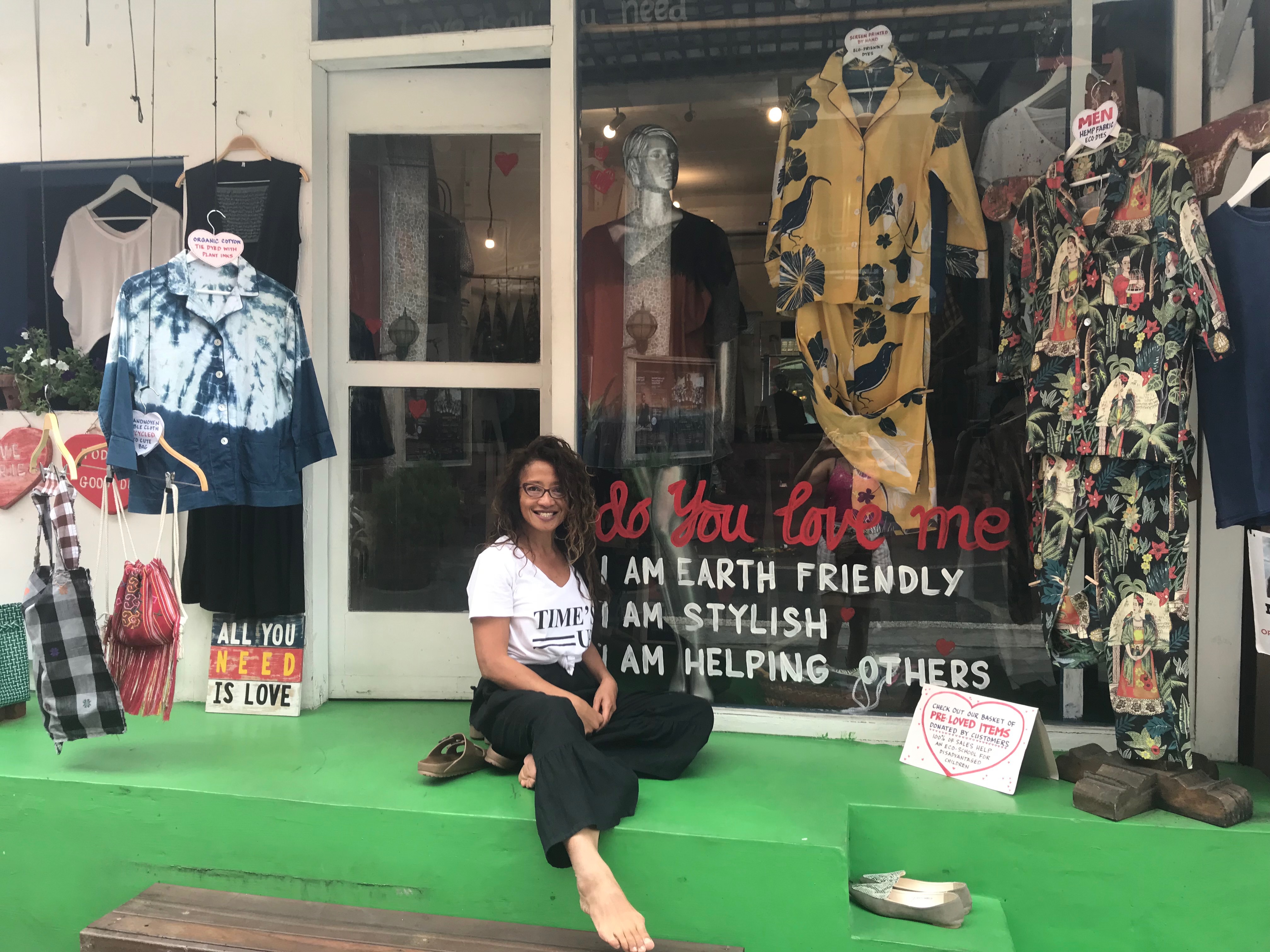
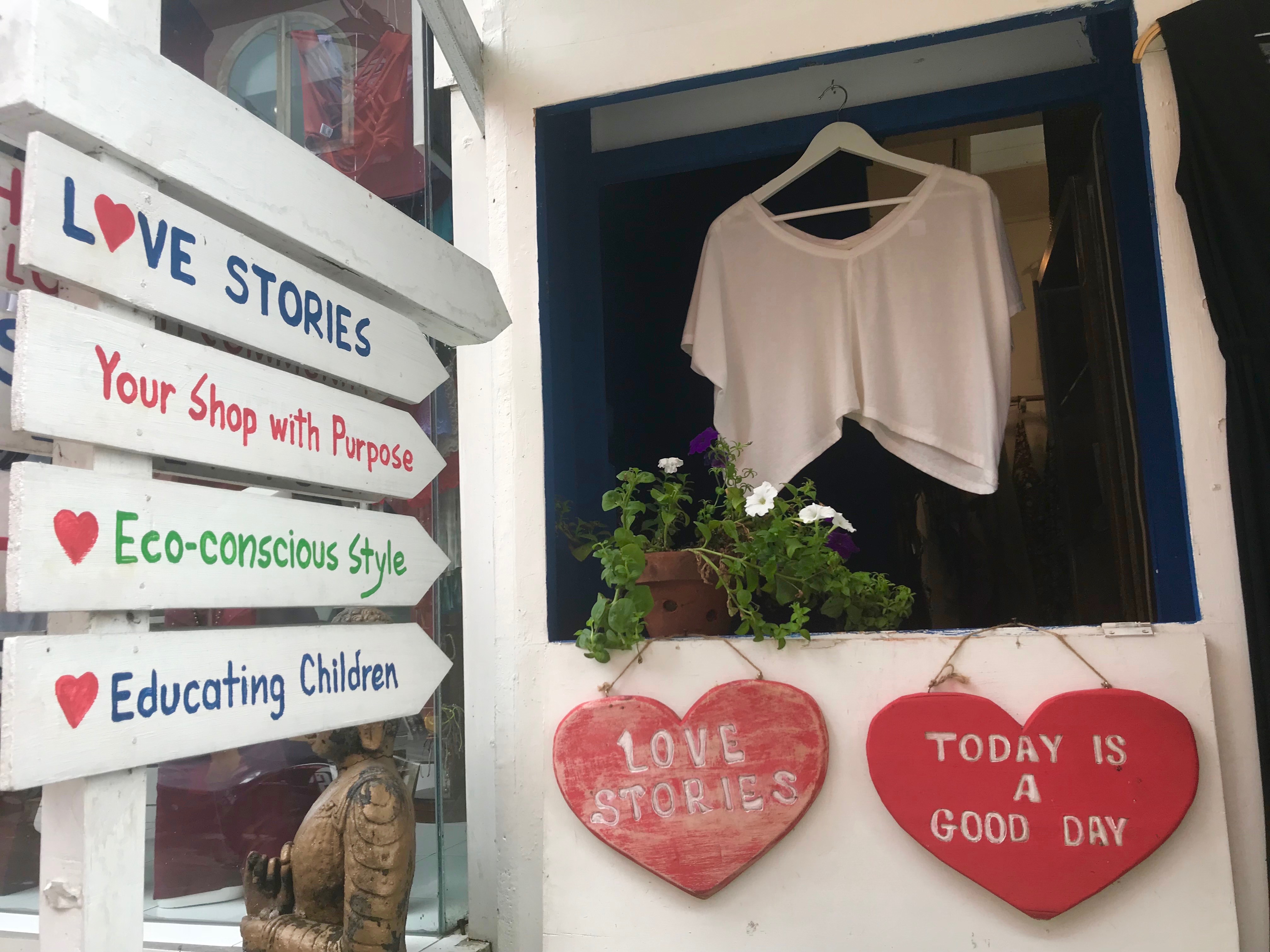
Imagine you buy new clothes, nobody gets harmed and you make not only yourself, but a lot of people happy with that. It is possible. With the earth friendly Love Stories Market in Ubud. Tess from New York left wall street and now runs this shop that sells eco and fair fashion in order to support education.
And yeah we know: The textile industry is one of the most dirtiest businesses in the world. People and nature get exploited. But still although we know the dirty reality, it is hard to stay away from buying a new nice dress, a funny shirt whatever. Our ignorance “protects” us from having a bad conscience. Craving for cheap clothes in the „dress for the moment style“ is stronger than facing the suffering that it behind the fancy new sneakers for the next party.
I always loved fashion. It is hard for me not to look at it and not to buy something. I know that many people are same. But many of us from middle-class to the rich people of course have the choice what to buy. I constantly get triggered by colours, shapes, structures, designs and lately when I saw the new collection of a big global chain I wanted to have half of it now. As this collection is copied from clothes from 20 years ago, I calmed down and instead of consuming this new stuff, that was mostly produced in sweatshops under slavery conditions, I checked vintage shops. I tell you it is all already there. You get beautiful unique pieces. In shops in your city or online. On top you are not running around with a coat that every third person will be also wearing this season. Same with Tess and her Lovestories Market in Ubud. They do special unique fashion. She has upcycled clothes and new fair and eco fashion. I ran into her place, because of an extravagant violet dress that was hanging in the shop window. As I bought it, I did not have to have such a bad conscience.
A bit creased from my backpack travels but still lovely. In Ubud where hardly one says nice things about your look this dress got a lot of attention.
Tess told me that the profit goes into two preschools in Bali that she is supporting or better said the preschool are the reason why she opened the shop: With the money, underprivileged children get the eduction they deserve. Fashion for education! I spoke with Tess about it:
Yvi: Tess, what brought you from New York to Ubud?
Tess: My need, my wish and my dream to do community service. I wanted to take a break from my job at wall street and thought I will give it a shot for a year, but it has been two years and I am still here.
Yvi: Wow: From Wall Street to fair fashion…
Tess: I am doing fair and eco fashion combining sustainable fashion and giving back the community.
Yvi: When did this start?
Tess: First when I came here I was volunteering at a school, and after I saw that there is so much need in the school, founded by a very strong woman, who is a revolutionary in the preschool education, that we could help her more if we have more funding. So instead of me just giving my money and my friends money into the school, we thought we open a shop to gather with women who believe in fair &eco fashion as well that we would be able to raise fund by donating the profit to the school.
Yvi: I just bought a beautiful violet dress, the profit goes into the preschool give me details.
Tess: When you buy: so the price, minus salary, minus operational cost, production cost equals profit. And that profit goes into the school.
Yvi: How do you bring such a dress to life?
Tess: I come from New York, so fashion is natural for me, but I also wanted a change, fashion to be earth friendly that I can look beautiful without harming the environment and without harming the people who make it. And it is possible. I designed the dress. The way we design your dress is simply just looking at this beautiful handwoven plant dyed organic cotton and we thought: “How can we make this look so beautiful on someone without destroying the pieces of that beautiful fabric?” We work with two workshops in Gianyar, a little bit outside Ubud, they follow sustainable practices and the one shop that does natural dying was the one who made your dress. They have handweavers on the spot, doing all this and they also have natural dyers, these are men, the weavers are women, and they do everything in that one workshop by hand.
Yvi: I bought the dress and I saw was only 1 of it, are there more?
Tess: We like to make one of a kind. It is special – apart from the fact that our pieces are handwoven, no nothing really looks alike, because if you use chemicals and machines, they of course will lookalike, but with what we have we use hands and the hands cannot duplicate. So your dress is very special and we like that everything you buy in the shop is very special.
Yvi: You also make pieces from pure silk.
Tess: Yes. Because it is the most luxurious and we love handpainting them. And when we create the art for the hand painting, there is a meaning in every art. All our silk designs are made out of nature and out of what we see in Bali.
Yvi: You also have a nice selling concept outside Bali
Tess: We do pajmaparties. I go twice a year to America and I hold pajamaparties with women who have money and I thought maybe they will never buy. Because why would they buy if they can afford the designerclothes, but surprisingly they notice that we make sustainable fabric very sexy.
Yvi: How do you live – you get also a little bit of money from all that?
Tess: No I don’t – I am living from my savings at the moment. I actually give more then my own savings.
Yvi: Thank you so much, all the best!
Tess: Thank you too for spreading the message.
________
You find Love Stories Market in Ubud opposite of Paradiso and a brand-new shop in Canggu. Check their Facebook for exact details.
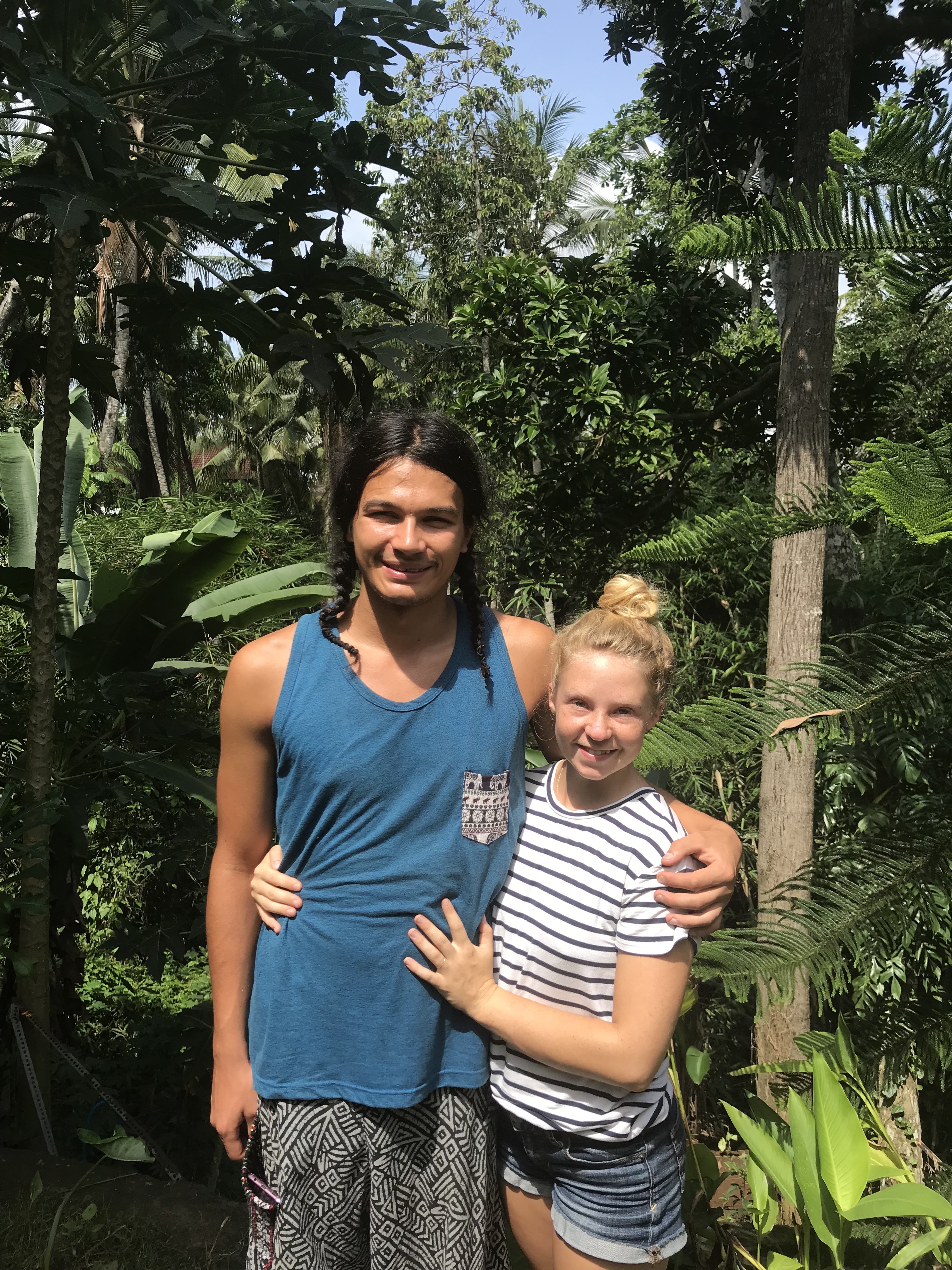
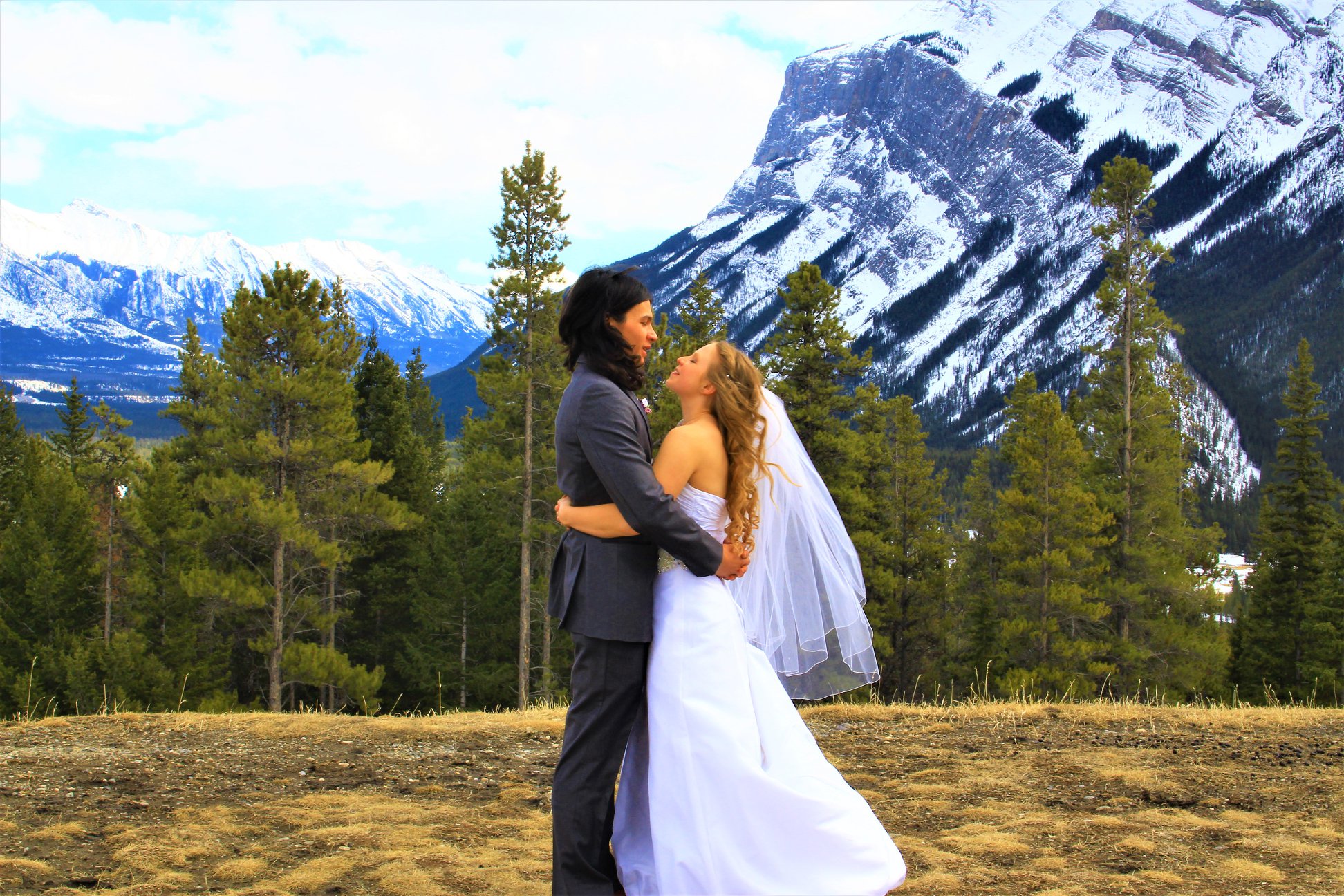
In the jungle of Ubud, the hot spot where free love rules and detachment challenges are on a daily schedule, I met a young couple that committed to each other 1 to 1 and got married. Samantha and Jett from Canada. They know each other since 11 years, since 5,5 years they are a couple and since 8 months they are married. As they are so happy I spoke with them about their relationship, the necessity of opening up, speaking about values and how to share emotions and feelings in order to grow together. Before they got married they did a test if they really match. They went on a long hike…Last week on Ecstatic Dance between all the free spirits I saw a couple dancing with each other from the beginning until the end and they could still breathe. They were over 80 and in bliss. Pure freedom can also be achieved when you fully engage with someone. But for this some inner work is needed, some courage, trust and the will to make a choice. I see Jett and Sam going the same path. Enjoy reading their story. Mucho Love, Yvi
Yvi: What is really astonishing for me, you look so happy as if you would have met 2 weeks ago. How do you do your relationship?
Jett: You gotta be honest and tell them exactly how you feel when you feel it, that is when your emotions are true. And if you hold a grudge and you let it wait your emotions will get clouded and you forget why you are actually angry. So it becomes lost anger. You can’t get over.
Sam: We can tell each other in the moment how we feel with kind words and talk through it.
Yvi: You are so young. How did you learn to talk to each other in this mature way?
Sam: For me I was very quiet I hold a grudge if I was angry, giving the silent treatment, but he always pushed me to be open when we talked about what’s wrong. He had no judgement around that. You know when I did tell him how I was feeling, he would not get angry at me, he is like “Ok I see your perspective, but this is not really what I meant.” Or maybe it was a misunderstanding. Or maybe we do butt heads, but why does that have to be a problem, can we agree to disagree? Does it have to be a huge deal? Like put some perspective on it and see it from a bigger point of view.
Yvi: Many people I meet, have problems getting access to their emotions and they are running away, sometimes without even noticing it and they are older than you are. Jett why are you so open to your emotions, why can you feel them so well and allow them to be articulated in your partnership?
Jett: I do not wanna hold a grudge on myself so… that is a good question..
Yvi: What about your parents, have they taught you that it is an important instrument for relationships that you learn to feel and express your emotions?
Jett: My mum, she is a wonderful happy lady, but cross her line she is gonna tell you exactly where you went wrong and why she doesn’t enjoy how you acted. So I kind of learned from that: Gotta tell it how it is and don’t hide anything, because then you are just hiding who you are. That is not honest. Being dishonest is not only to yourself, but to everyone else around you.
Yvi: Are your parents still married?
Jett: No.
Sam: No. My parents divorced when I was 10. Until then I had a quite picturesque childhood, a happy family but then there was a lot of arguing, unpleasant in the house, a lot back and forth I think I learned a lot from their mistakes, and what not to do in a relationships and one of my friends had a very picturesque childhood her parents never fought they were so kind to each other, I saw that and I thought that is what I want. I have to be kind to my partner and not use harsh words to my partner
Yvi: That is interesting, because many children that come out of divorced families they are repeating what they saw at home. You are not repeating at all and on top you were sure to marry.
Jett: Oh yes. I put a lot of thought into my actions, I ponder before I act. Where else that would be impulse and that is very bad… You know when you are going to a store and when you don’t think about what you wanna buy, you buy something and then you realize that you don’t need it. You gotta be sure of something before you act, where else it has no meaning to it!
Yvi: Your parents are divorced, but why did you choose to get married?
Jett: Because I saw that it is really important to Sam to marry and I realized I wanna be with her forever and I should get married if that is what it takes to keep her then I do that for her even though it really wasn’t a part of my believe. I did not see marriage a needed thing to keep a relationship, but for her believes it is very important, so I just wanted to make her happy and also make myself happy along the way too.
Yvi: How was your wedding?
Jett: Very beautiful, one of the best days of my life, if not the best day of my life, because we were really bringing all these people around, really show support on who you are marrying and who you love, especially of – You guys are sure, then your family is going to be sure on it, because you can see that you are unhappy. They don’t want you to be unhappy, so being sure, really shows them that you are actually happy and they are ok with that. And really teaches them to grow to love the person. If they love you then make them love them the people you love too.
Yvi: How do you feel after having married?
Jett: I feel the same.
Yvi: In Germany before they marry they have a day when they get T -Shirts and on it are sentences like: “Last day in freedom”. Do you still feel free?
Jett: Yes, she let’s me breathe, she lets me run, I run into the forest and I always wanna come back.
Sam: He is hanging around with his bros and planning a trip alone to South America without me and that is fine. I know he will come back to me and be faithful.
Yvi: You have your values like being faithful, did you talk about it what exactly your values are?
Sam: Before we got married that was a really big thing for us we had to make sure that our values are aligned, because I can tell why it did not work out for my parents which values were not aligned. For me marriage was so important, because I grew up in a Christian home and another thing was bringing up one day children or having a family together how we will raise them, in which religion or spirituality we will bring them up in. Until we could not figure out or align that value I could not move forward any further with that relationship, but then we both figured out a way we are both happy with, moving forward with those sorts of things. We knew that we will be happy together if we would do it this way that we agreed upon.
Yvi: Have you been discussing more about a particular value?
Sam: Before marriage for me it was religion. How to bring up our children. I am Christian and Jett you wanna share your believes?
Jett: Yes, I am Native American so everything is from the earth, god is all around, even though we don’t call it god. It is the great creator Kisemanto we call it. I realized, all religions even if their rules are different, they all believe in one thing the Higher Power, I was able to agree with Sam on her religion even though she was not able to see mine all the time.
Sam: We sometimes disagree about certain things, but we did agree to pray, mediate, connecting spiritually and we celebrate Thanksgiving.. that was enough for me to move forward with our relationship.
Yvi: Is it always easy peasy or do you also have fights?
Sam: We definitely have disagreements, but I think most of the time they come around when we spent too much time together. We just need to have a lone time. Sometimes we do butt heads, but we never yell or throw harsh words at each other, because we know that this is just damaging. When we do get frustrated with each other, we kind of take a step back and ask: “Ok why is this happening, what is the problem here, do we really need to be arguing about this, because usually it ends up about something like “Oh you didn’t do the dishes, I have been doing the dishes all week, Do you think maybe you could put in some effort?” And then actually he is like: “You know I did the dishes, but maybe you did not see me doing it, maybe you feel like overworked, maybe you can take a step back and relax.” And I am like: “Oh ja, I did have a busy week, sorry I am taking out my anger on you. I just need some time for myself, some time alone or some selflove.” There is usually a reason for your actions. You have to take a step back and see “Ok what is going on here behind the scenes!”
Yvi: Have you ever gone to bed with a fight?
Jett: No, gotta get it out right then and there. Where else you wake up angry and then that ruins your whole day.
Sam: When we went into our marriage we said: “We are not going to bed angry at each other”. But last day we had a silly fight & went to bed. I turned around in bed, huffing and puffin like “och I am angry about something silly”, but 3 minutes later he tapped me on the shoulder and said: “Ok, but remember we said we would not go to bed angry at each other. So can we forgive each other and move past this?” And I said: “Yes, we can. Good night.”
Jett: My mum always tought me that you have to keep a promise. Promises are bonding so you can’t break them. That is why she does not promise so much for anything, cause she might break it, but marriage is a big promise, you gotta learn to keep that. It is a big step, that is why you really have to think about it before you marry someone. Where else you find yourself marrying the wrong person all along, that is gonna break a promise, that is gonna hurt you in the long run, hurt your dignity and your selflove and your partner.
Yvi: On my journey I have seen many couples that did not seem to be so happy being with each other. At dinner starring with grumpy face at their smartphones, having arguments at the beach, discussions in the rice fields about together and lonetime, they come home again and maybe split up. As a couple you have many tests in holiday and in daily life. Where did you check if you are getting along really well?
Jett: 3 years before the wedding, we went on a hike on he west coast trail on Vancouver island, it is 76 kilometers and we did that hike to show all our emotions, because you get frustrated with yourself, with the actions around you and it really teaches you about each others emotions. And you come to terms to realize that these are my problems, not hers. So I should not make it her problem and I learned to deal with it myself.
Yvi: It is always this “Come back to yourself”, when emotions are arising.
Sam: Yes, and not to blame somebody else, take responsibility for your actions and emotions. When we did that hike there was no social media, there is just you and that person and this long trail the journey ahead and this heavy pack and walking all day. You have to keep the mental positivity going in your head, because it can become stressful and you really see the other person in their weakest moments.
Jett: On the trail I noticed how some other couples treat each other. It really teaches you how you don’t wanna act, so when the times comes that you are feeling a taff situation, just reflect on how sad it made you feel seeing how other people treat each other with the aggression that really only comes from their own stress level and nothing else caused by their partners. You gotta…
Sam: Harness those inner emotions. For both of us it was a lot learning from other peoples behavior towards each other. Really take that in and look at yourself and where you can change and grow. We are seeing each other things when we talk to other people, and then we talk to each other like: “Oh you are maybe a little bit harsh?” We say: “Okay I am gonna work on that and try not to be that way, or can you give me a gentle reminder if I do start acting that way to be my best self?” It is a work in progress.
You can choose to be still a good person in that weak spot. You see this person in their rawness, and love this person. It was great encouraging each other and uplifting like “We make it, it is going to be fine!” You know you have your doubts like „How we gonna make it, the trail is so long“, but we just keep going pushing each other forward and then this was when we knew it is gonna be good.
Yvi: What are your plans?
Sam: When we come home we wanna safe up for our first home and we are starting our careers. Jett is a chef and I am a health coach and personal trainer. We wanna go our own ways. Jett wants financial freedom, that we can do what we really wanna do and love in life and start a family.
Yvi: Paint a picture! Where is home?
Jett: My tribe is Mikesew Cree and we come from the Athabasca area, bit I was born in Edmonton Alberta, which is 4 hours south of it. I kind of grew up all over western Canada, always moving as a child, which is where my need for travel came from, but on this travel trip now that we are actually out here traveling I come to realize that Home is the best place. I really love it back in Canada. I don’t think I can ever get the connection to any of the land anywhere else than at home, because it is just ingrained in me. It is very beautiful.
We wanna build an Aframe House, have a little piece of land on the mountain.
Sam: We wanna host people from around the world and cook for them and help them hike in the mountains.
Jett: We want to have 2 children of our own and then adopt a third native American baby to give them a chance in life, because in Canada they really are repressed people. Lot’s of them growing up without ever having a chance to experience the world for what it is, wanna give them the opportunity for that and also teach my culture to these children, they never get the chance to actually learn it, because they are grown up in such a hard life that they kind of deny it or ignore the fact of what they are. I wasn’t raised like that, but that is how people treated me as if I was some lesser and my culture just some primitive way that should be extinct, but then the more I learned about it the more I realized that it is really my believes, so made me more connected to it and wanna teach our kids that way and raise them to love themselves along with other people.
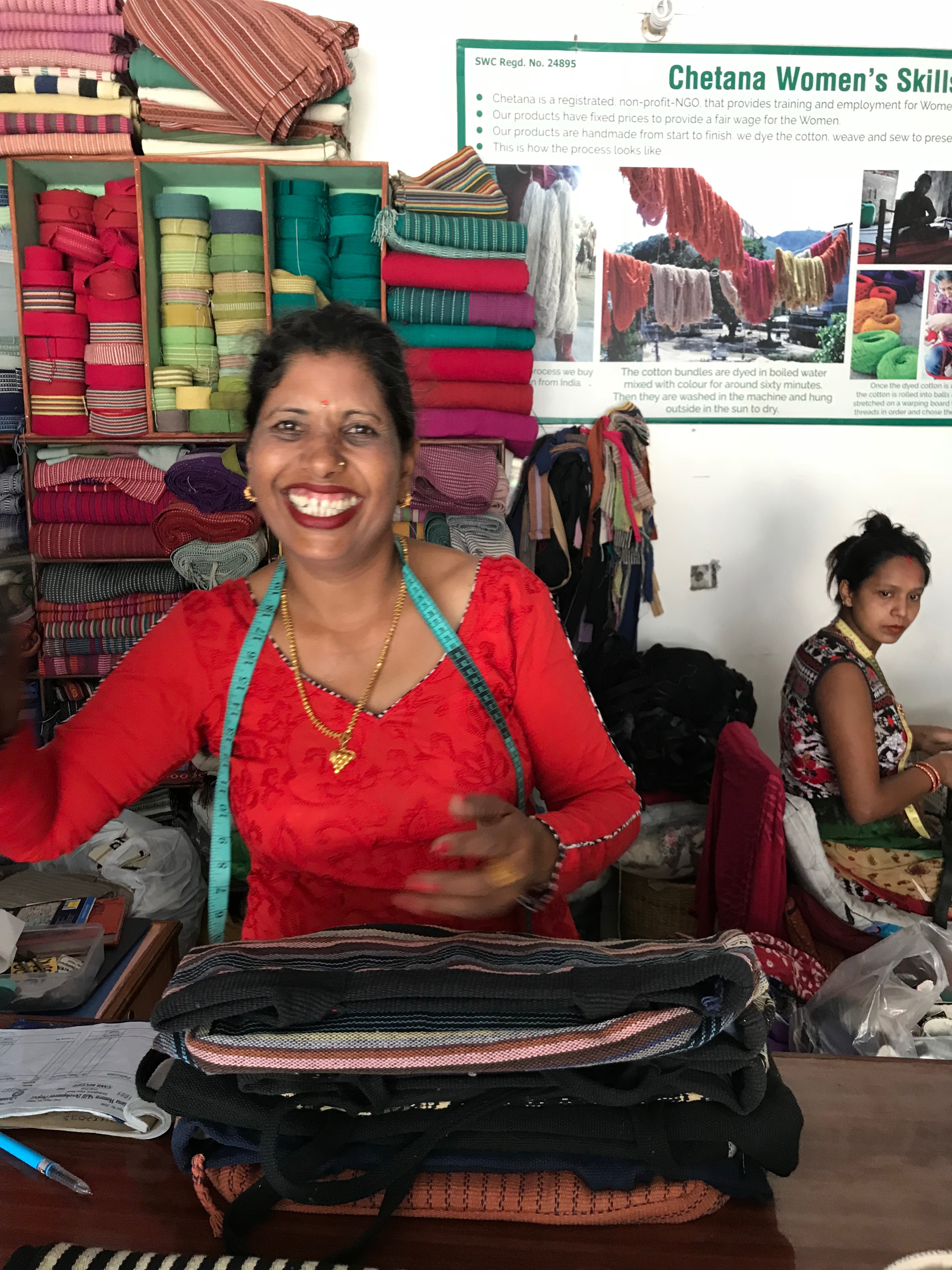
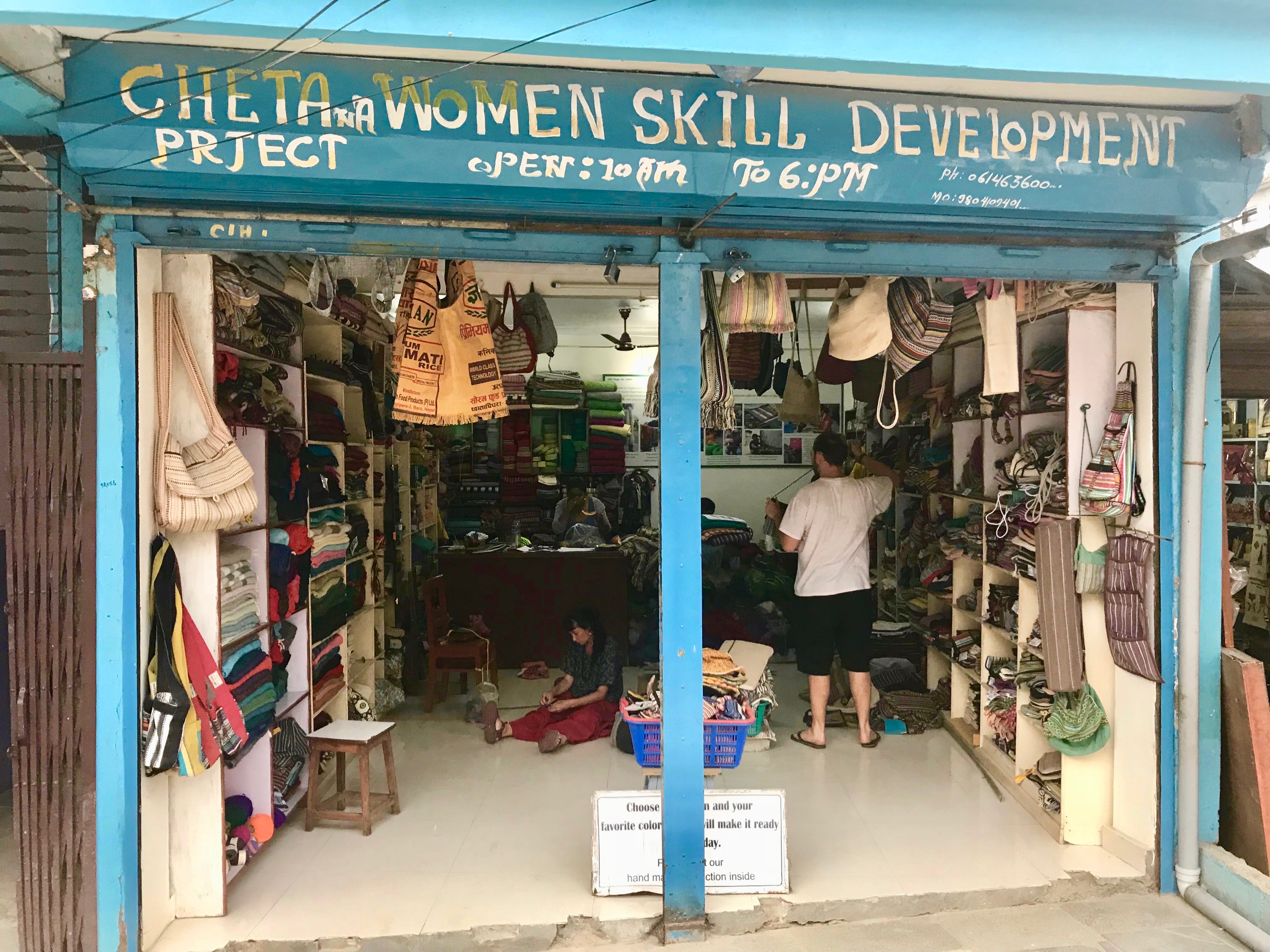
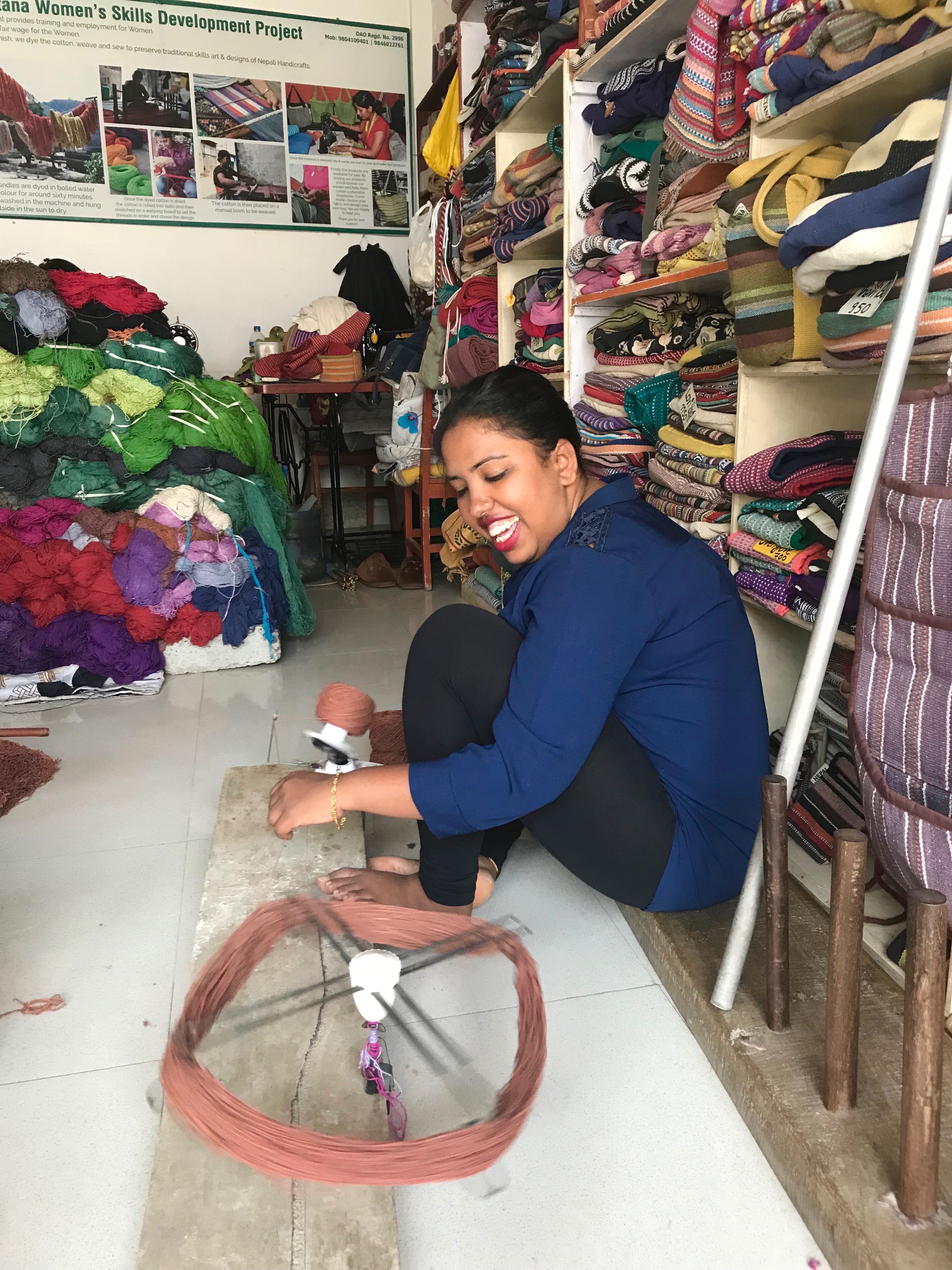
Auf meiner Reise durch Nepal traf ich Tara Timilshina. Sie hat in Pokhara, dem Städtchen am Fusse des Himalaya, Chetana – einen Laden mit wunderschönen handgemachten Taschen und Gürteln. Es ist kein normaler Laden. Chetana ist ihr zweites Leben. Sie gründete ihn nach schwerer Krankheit, die sie fast ein Jahr ans Bett fesselte. Vorher hatte sie ein gut laufendes Trekkingbusiness, jetzt widmet sie ihr komplettes Leben den Frauen ihrer Gemeinschaft. Der komplette Erlös von Chetana fliesst in den Support von Frauen und ihren Kindern. Sie bekommen Training und einen Job bei Chetana, ihre Kinder einen Internatplatz. Chetana bedeutet „Öffne deinen Geist für Bildung“. Tara selbst kommt aus einem kleinen Dorf und genoss keine Schulbildung. In Nepal sind etwa 50% der über 14-Jährigen Analphabeten. Frauen haben geringe Bildungschancen. Lediglich ein Drittel von ihnen kann lesen und schreiben. Männer sterben in Nepal früher als Frauen, wie Taras Mann. Sie und ihre vier Kinder, wovon eine Tochter adoptiert ist, schmeissen Laden und Leben. Und das Leben von vielen hundert anderen Frauen. Tara bietet mit Chetana Frauen die Möglichkeit unabhängig zu werden. Kennengelernt habe ich sie durch Lisa Mikosch, die in Bonn und Kathmandu lebt. Lisa supportet Tara seit Beginn der Eröffnung des Non- For- Profit Ladens. Und ihr alle könnt mithelfen als Volunteers.
I met Tara in Pokhara, a city from where many people do the Annapurna Circuit. Tara and her husband had a successful trekking business. They could make a good living with it. After getting life threatening ill, she changed her life and career. Since 10 years she supports women and their children with Chetana, a non-for-profit NGO. They learn beautiful traditional Nepali handcraft skills and do bags and belts. 280 women from villages got a training so far. Some of their children get a place at a boarding school. Chetana means „Open your mind for education“. Tara herself comes from a village and did not go to school. 50 percent of the over 14 years old in Nepal are analphabets. Only one third of the girls/women can read and write. Tara is autodidact. She is so smart and powerful. She has 1 son and 3 daughters, one of them adopted. Tara wants to provide education for women in Nepal as much as possible. She is dedicating her complete life to this kind of support. Taras husband died, but Tara gets along with her life, because she managed to build a supportive community of women… I met her through Lisa, a friend from Germany that lives in Kathamandu and Bonn. She is supporting Tara with Chetana as well. Everybody can volunteer.
Yvi: Namaste Tara.
Tara: Namaste!
Yvi: Please tell me about the shift in your life. From just making business to giving.
Tara: I had a big trekking business. I made only for myself business. I saw I had enough for me, could build a house as a guesthouse. I became very sick and I decided I wanted to do something for women, build a woman program. I left my business and with Chetana this is a second life for me.
Yvi: What do I need to know about Chetana, it is not a normal shop where I can buy bags?
Tara: My shop is not only for buy, you are the support.
Yvi: So you don’t make a living with the shop?
Tara: No. Chetana is registered as a non-for-profit NGO. Money goes to rent, electricity, water. And then to the support for the women and children. We don’t need to make more profit. This is non-for-profit organization.
I integrate women that have problems with family and with the caste system in Nepal. Who get no education, have husband problem, family problem with these kind of women we are working together.
Yvi: How do you get in contact with these women?
Tara: We have application for women, we announce in the local newspaper, visit villages and talk to them, give them training for 3 months. They get free skills like textile design, cotton master, sewing, weaving. After the 3 months we give them a job. They get sewing machines and then they work at their homes making the products for Chetana. And when you buy here a bag or a blanket or a belt, the money goes directly to the women and their children and their education. We already supported 280 women like this. We sent the children to boarding school, at the moment 8 children are supported by Chetana.
Yvi: The kids of Chetana women, they can go to a private school?
Tara: Yes. To a boarding school. I try to help them to become strong and independent.
Yvi: Seems a lot to do. How many hours do you work a week for Chetana?
Tara: Every week 40 hours or more since 10 years. It is my hobby. I like it so much! But last year my husband died and I was not well physically. Now my daughter supports me and the shop , so at the moment I work 20 hours a week.
Taras Tochter Pabita, Taras daughter
Yvi: You make a difference for women’s life in Nepal. Tell me about the life challenges they face?
Tara: Men and women are so much different treated in Nepal. It is mentality. Women need to give birth to sons. And I am now a single woman and they say “Oh you are without husband.” I say: „Yes and I like to empower woman.“
Yvi: You have 1 son and 3 daughters, one of them you adopted. Why?
Tara: My husband was a trekking guide, he brought me the child. She had no possibility to go to school, hardly food, her mother cannot take care of her, so I provide it for her, she lives with me now. That is karma. She is in tenth class now and is one of the best. When she finishes school, we will find a job for her. Maybe she will help with Chetana or whatever she wants to do.
Tara: You are supported by a german woman called Lisa.
Tara: Yes since 10 years. She is selling our bags in Germany, she finds sponsors for the children of Chetana women that pay the school fees.
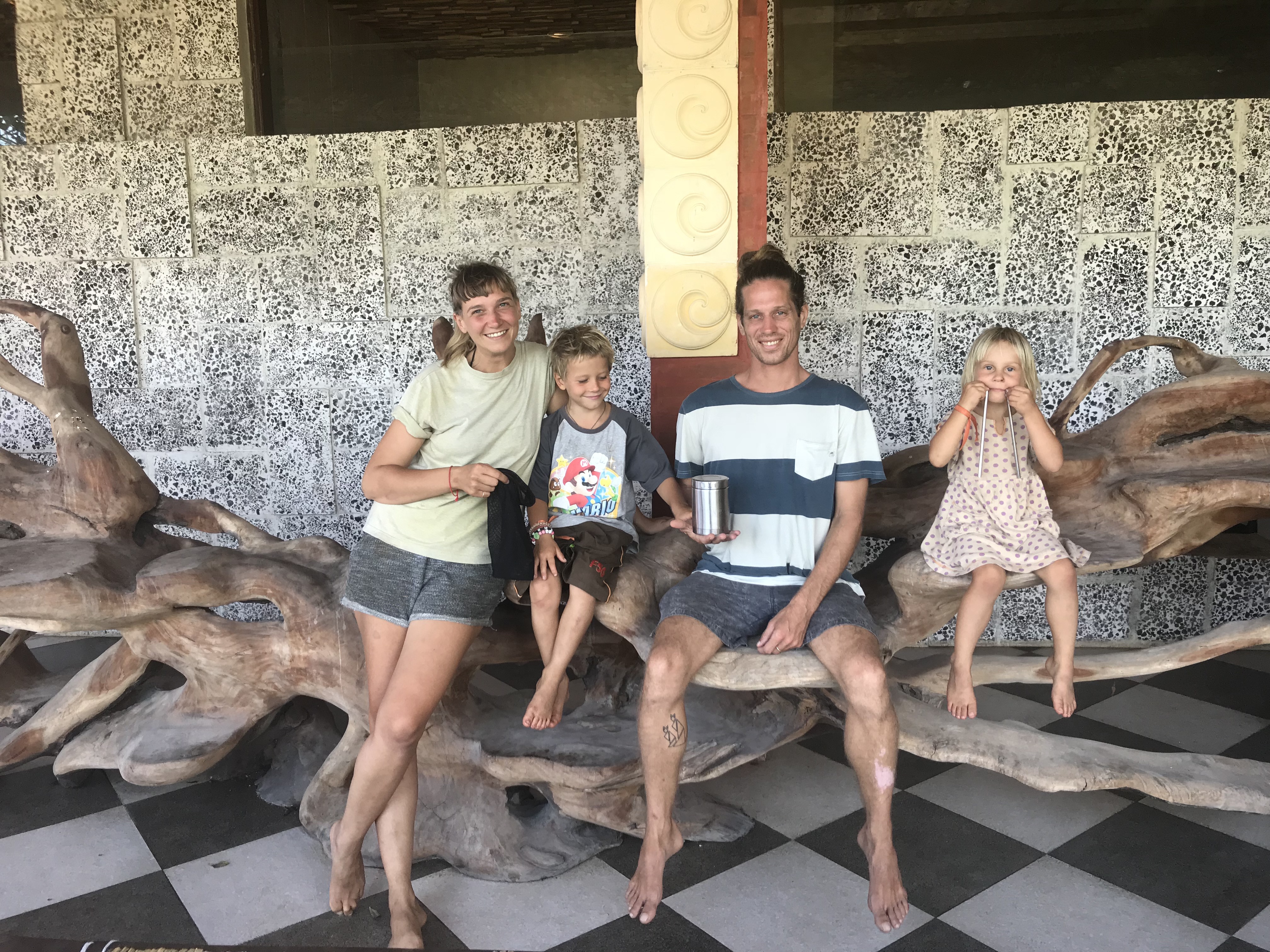
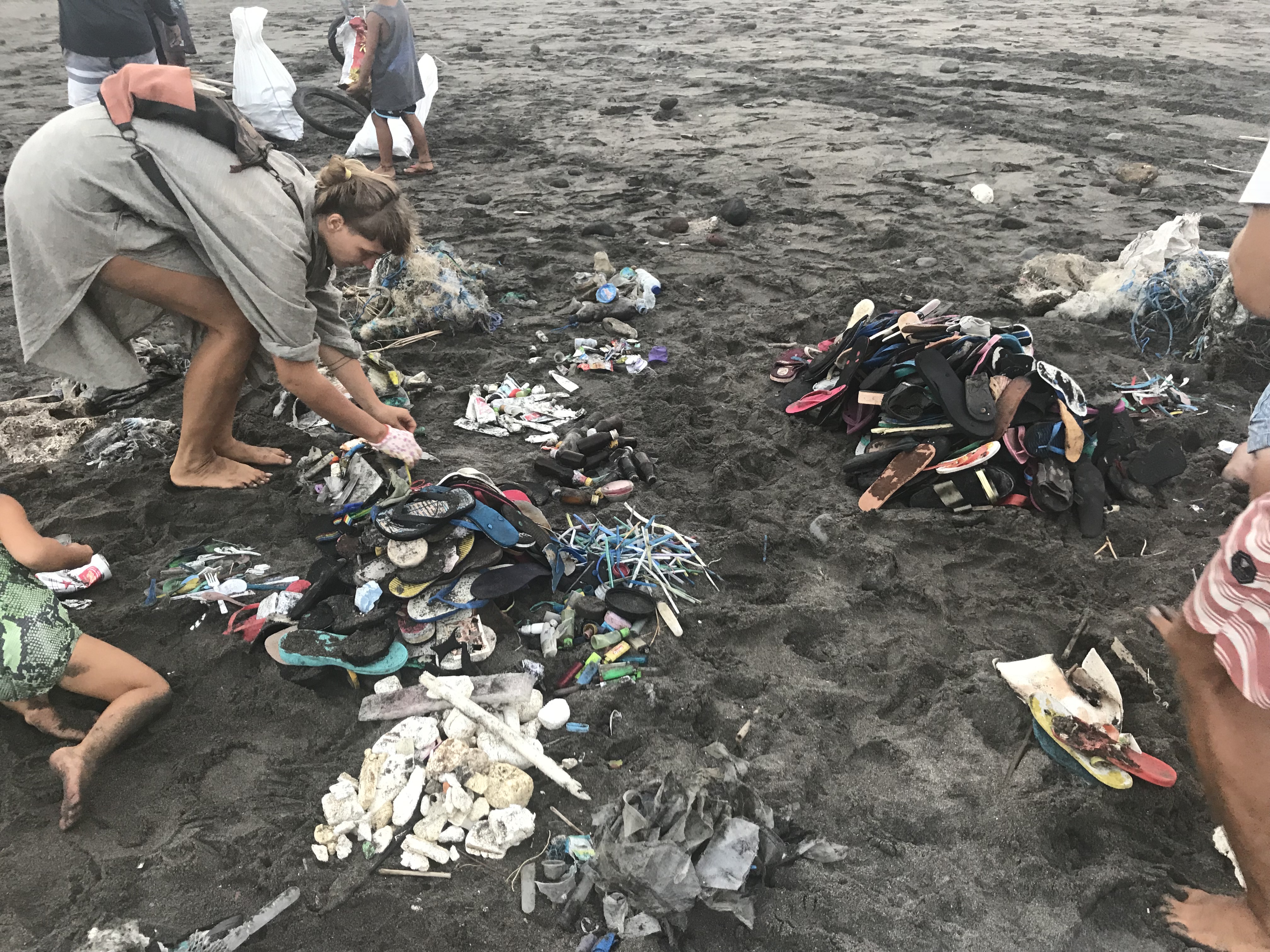
Am Ende eines Tages bleibt auch mal eine leere Dose Sprite übrig bei der Familie Katzenberger. Die vierköpfige Familie aus Österreich ist nicht perfekt, aber sehr bewusst unterwegs. Sie lebt so gut wie müllfrei, besonders auf Reisen, da das Reisen an sich schon genug umweltschädlich ist. Franziska und Flo haben daheim in Österreich ihr Hab und Gut verkauft und sind seit einem Jahr in Asien unterwegs mit ihren Kindern Oskar, 5, und Luise, 4. Sie arbeiten vor Ort und unterstützen Umweltprojekte. Von Thailand ging es nach Malaysia: von Penang nach Borneo und über Singapur nach Indonesien. Und hier in Canggu beim Beach Clean Up traf ich die Familie. Zusammen mit Green Me Away und Trash Hero Canggu haben wir mit 30 Leuten 500 kg Müll am Beach gesammelt in nur zwei Stunden. Ganze Hausräte lagen hier meterhoch im Sand und im Gebüsch herum: 434 Flip Flops, 349 Plastikwasserflaschen, 34 benutzte Babywindeln, klaro: 744 Strohhalme und unfassbar viele Zahnpastatuben. Indonesien ist der zweitgrösste Plastiksünder der Welt.
Franziska und ihre Familie beim Beach Clean Up
Viele Balinesen haben noch kein Bewusstsein für Plastik und Müll, denn bis vor einigen Jahren war fast alles kompostierbar. Nun werfen sie auch Plastik und co neben die Palme, als wäre es organisch. 130000 Tonnen an (Plastik)Müll fallen jeden Tag an, die Hälfte davon wird ins Meer und in die Landschaft geworfen. In Bäche, vor/ neben/ hinter den Häusern, in Gräben, Palmenfelder, vor die Reisfelder, zwischen Fischerboote, auf Friedhöfe und einfach an den Strassenrand, wo die Versuche, all das zu verbrennen, oft nur halb gelingen. Angekokelt liegt der Müll dann herum. Einige Balinesen, die begreifen, dass ihre Insel am Limit ist, bitten um Hilfe. Die Regierung schaut weg, private Firmen wie Eco Bali versuchen Schadensbegrenzung zu machen, indem sie einen Teil von der Urlaubsinsel runterbringen und recyceln.
Auf Bali wird die Situation besonders heikel, da mehr und mehr Urlauber ein Stück vom Paradies haben wollen. Zu den Einwohnern kommen noch über fünf Millionen Touristen jährlich. Wenn man bedenkt, dass Bali kein richtiges Müllverwertungssystem hat, versteht man auch, dass jeder Strohhalm, jede Plastiktüte und jede Plastikflasche, die man konsumiert, zuviel ist. Ich sehe hier auf Bali leider viel zu wenig Bewusstsein für dieses ernste Problem, das so präsent ist, wenn man mal hinsieht. Touris lümmeln mit Strohhalmen am Strand von Uluwatu rum, abends brennen die Dinger hinter den Warungs. Ich verstehe, dass Menschen im Urlaub es sich gut gehen lassen wollen, aber das geht auch ohne Strohhalm und co. ..den Papayasaft kann man tatsächlich auch einfach so trinken, oder?
Familie Katzenberger ist ein tolles Beispiel, wie man sein Verhalten ändern kann. Das Besondere an den vieren ist, dass sie keinen Zeigefinger erheben, sondern selbst etwas ändern, mit anpacken und auch noch Spass dabei haben wie beim Beach Clean Up in Canggu.
500 Kilo Müll am Strand bei Canggu in 2 Stunden gesammelt
Interview – als Audio weiter unten:
Yvi: Oskar und Franziska, es ist wunderbar euch hier zu treffen.
Franziska: Es ist auch schön, dich zu treffen.
Yvi: Wie ist denn der Beach Clean up gewesen, hast du etwas besonders gefunden Oskar, wo du dachtest, was macht das denn hier am Strand?
Oskar: Ja ich haben einen Kuschelbären gefunden. Die Mama hat einen Trage und mein Papa hat einen Rollerreifen gefunden.
Yvi: Wahnsinn, und was denkst du denn, wenn du so Sachen am Strand findest?
Oskar: Ich denke: „Hä, das kann man doch nicht einfach wegschmeissen, das ist doch zum Kuscheln.
Yvi: Franziska, das war nicht euer erster Beach Clean Up, oder?
Franziska: Nein wir gehen regelmässig zu Beach Clean Ups mit den Kindern zusammen.
Yvi: Wo war es denn richtig krass auch, ich finde es total heftig, deswegen bin ich aktiv geworden. Wie ist es für Dich, was hast du gesehen?
Franziska: Für uns war es auf Borneo ganz schlimm. Weil es da kaum jemanden gibt, der irgendetwas macht oder es gibt. Oder es gibt auch Plätze da ist keiner und da wird der Müll einfach angespült und liegt dann einfach dort. Das war schlimm für uns. Weil wir auch da gewohnt haben uns unser Job da auch, war den Strand zu reinigen, an dem Strandabschnitt, wo wir gewohnt haben.
Yvi: Ihr seid ziemlich speziell unterwegs, ihr versucht so wenig Müll wie möglich zu machen, das clasht total mit dem, was ich hier in Bali sehe, wo junge Familien sind und gerne den Food Lieferservice benutzen drei Mal am Tag, geschnitten Melone kommt in Styroporboxen geliefert und ihr macht fast das komplette Gegenteil fast Zero Waste?
Franziska: Unser Ziel ist ja überhaupt keinen Müll zu produzieren. Wir nennen das Müllfreireisen.
Yvi: Wie funktioniert das?
Franziska: Es ist auch ein bisschen wie zuhause.
Oskar: Und keine so viele Flieger basteln..
Franziska: Papierflieger basteln, da haben wir noch keinen Riegel vorgeschoben….Man muss gut vorbereitet sein und ganz oft nein danke sagen zu vielen Strohhalmen, die man bekommt, wenn man ein Getränk bestellt, zu Styroporboxen beim Essen zu Plastiksackerln,
Oskar: Manchmal haben Leute gesagt „ich tu keine Strohhalme rein und dann haben sie es glaube ich vergessen und Strohhalm reingetan“.
Yvi: das hatte ich auch. Das ist ganz schwer aus den Köpfen heraus zu bekommen und aus dieser Handbewegung, die immer automatisch in jeden Fruchtsaft einen Strohhalm reinpackt.
Franziska: Es klappt leider nicht zu hundert Prozent, aber für uns ist Zero Waste ein Weg, den wir zusammen gehen, das heisst wir sind nicht perfekt, auch reisen ist ja an sich nicht besonders umweltfreundlich und deswegen tun wir vor Ort, das, was wir können. Das heisst wir versuchen gar keinen Müll zu machen, gehen zu Beach Clean Ups und versuchen uns mit Organisationen zu verbinden, die einfach ganz viele gute Sachen machen. Zum Beispiel auf Bali.
Yvi: Wann ist die letzte Situation gewesen, wo du nein gesagt hast…es gibt ja die 5 Rs, Refuse ist das erste..
Franziska: Die 5 R sind auf Englisch eben, Refuse, Reduce Reuse, Recycle, Rott. Auf deutsch ist das Ablehnen, Reduzieren, Wiederverwenden, Recyclen und Kompostieren.
Yvi: Wo ist es dir schwer gefallen, etwas abzulehnen?
Franziska: Naja gestern hätte ich schon gerne den Eistee getrunken, der uns angeboten worden ist, aber ich habe aufgrund dessen, dass es ein Einwegbecher war, habe ich nein Danke gesagt.
Yvi: Das ist verrückt man wird beim Beach Clean Up gesponsert von einem Restaurant und bekommt dann einen beschichteten Becher gereicht.
Franziska: Das sind so Sachen, das muss halt gut durchdacht sein und auch das funktioniert leider nicht immer hundertprozentig. Aber da ist jeder in seiner eigenen Verantwortung gefragt.
Yvi: Ist der Alltag auf Reisen, das auch noch möglichst müllfrei, nicht wahnsinnig anstrengend mit einer 4 köpfigen Familie?
Franziska: Eigentlich nicht. Es ist so wie zuhause, es gibt viele gute Tage, es gibt natürlich auch schlechte Tage, im Wechsel aber insgesamt ist es gut, sehr gut sogar.
Yvi: Was habt ihr dabei, dass ihr vor Ort keinen Müll produziert?
Franziska: Wenn wir einkaufen gehen, haben wir immer unsere eigenen Sackerl dabei, wo wir unsere Sachen reintun, das heisst wir benutzen kein Plastiksackerl, wir haben Edelstahlstrohhalme dabei für Getränke und wir haben Dosen dabei, wo man dieses ganze to go Essen reinfüllen lassen kann, wir haben einen Wasserfilter dabei, das heisst wir trinken auf der ganzen Welt Leitungswasser. Weil wir unser Wasser erst filtern, und somit müssen wir Plastikflaschen kaufen.
Yvi: Und das geht sogar mit den Kindern? Für alle, die immer Schiss haben „Oh das mit dem Wasser könnte gefährlich sein“.
Franziska: Nein, wir haben einen ganz tollen Wasserfilter, wir haben uns für eine Firma entschieden, die zu 99,99 Prozent alle Bakterien, Viren, Protozonen, schlechten Geschmack, Chlor rausfiltert, also das Wasser ist wirklich trinkbar. Wir sind seit einem Jahr unterwegs trinken hauptsächlich aus diesen Filtern und sind alle vier gesund. Also es geht!
Yvi: Und ihr habt genügend Energie, um bei den Beach Clean Ups zu helfen und so. Welche Organisation hat euch denn so richtig begeistert?
Franziska: Ganz super finde ich Trash Heros, weil sie in ganz Asien total aktiv sind. In Thailand haben die ganz viele Refillstationen, wo man sich kostenlos seine eigene Flasche auffüllen lassen kann und einzelne Personen wie zum Beispiel die Frau, die vor kurzem auf Bali einen Zero Waste Shop aufgemacht hat, weil sie gefunden hat „da muss jetzt etwas passieren, es muss die Produkte, die immer in Plastik verpackt sind, verpackungsfrei geben.“ Und solche Leute finde ich total inspirierend und total super und das muss man unterstützen.
Yvi: Bali ist ja eine Insel, die stark struggelt mit zu vielen Touristen zu viel Konsum, es gibt kein richtiges Müllverwertungssystem, tatsächlich ist jeder Strohhalm, jede Plastikflasche zu viel. Wie siehst du das jetzt hier auf Bali, ich meine ihr bewegt euch sehr unauffällig, ich probiere es auch hier auf Bali und stelle mich um, aber – und das soll kein Zeigefinger sein – aber ich sehe viele Menschen, die noch gar nicht in diesem Bewusstsein sind, wie schwierig das hier mit dem ganzen Müll ist…
Franziska: ja ich sehe sehr sehr viele Menschen die sehr sehr viele Plastikstrohhalme verwenden oder für jedes kleine Ding eine Plastiktüte verwenden. Mir fällt auf, wenn man es selbst ändert, dass man angesprochen wird „oh was ist das? Wieso benutzt ihr eure Edelstahlstrohhalme?“ und dann kommt man total schnell ins Gespräch mit den Kellern oft auch mit den Restaurantbesitzern und mit anderen Gästen von den Restaurants und so kommt man schnell ins Thema Müll hinein und so kann man viele Leute inspirieren. Wenn man selbst etwas tut und aktiv ist, auch bei den Beach Clean ups, fällt mir auf, dass man oft auch von Locals angesprochen wird, die mitmachen wollen. Und das finde ich immer schön, dass dann auf einmal viele Leute dazukommen und Interesse zeigen.
Yvi: Und genau auf diesem Weg seid ihr gerade. Nächstes Jahr plant ihr unterwegs zu sein mit einem Wohnwagen auf einer Mission.
Franziska: Unsere Idee ist eine Tour zu machen und die Leute noch mehr zu inspirieren, das heisst wir haben vor zu Surfcamps und Campingplätze zu fahren und dort zum Thema Müll Vorträge zu halten. Workshops zu machen, City Clean ups, Beach Clean Ups und einfach zu zeigen, dass Müllvermeiden gar nicht so schwer ist, nicht zu Hause und auf nicht auf Reisen wenn man ein paar Kleine Tipps und Tricks kennt.
Yvi: Und ihr müsst natürlich auch von irgendwas leben. Wie wollt ihr euch finanzieren?
Franziska: Wir möchten gerne mit Firmen zusammenarbeiten, die das Thema Nachhaltigkeit ernst nehmen und die sagen, da muss und kann auch etwas passieren und da möchten wir gerne Kooperationen eingehen mit Firmen.
Yvi: Viel Erfolg dafür! Und bevor wir jetzt tschüss sagen, möchte ich gerne von euch wissen, was bleibt den an einem Tag übrig vom Müll bei einer 4 köpfigen Familie.
Oskar: Manchmal eine Dose Sprite!
Franziska lacht: Das stimmt, und heute drei Papierservietten, ist auch Müll, den man hätte vermeiden können……
Weitere Infos:
Trash Hero gibt es weltweit. Zur Seite für Indonesien.
Ihr findet Trash Hero in Canggu, Ubud auf Nusa Penida. Checkt dafür einfach deren Facebookseiten.
Checkt auch gerne Judith und Gabrielle von Green me away. Sie packen an auf Bali und in Ecuador. Organisieren unter anderem Beach Clean Ups.
Eine Japanerin räumt auch einmal die Woche den Strand auf. Checkt auf Facebook Keep Bali Clean.
Eco Bali räumt den Müll von den Beach Clean Ups weg und recycelt tatsächlich. Erste Gästehäuser nehmen dieses System in Anspruch und lassen ihren Müll abholen.
Seit 2011 kümmern sich Jon und Olli um den Plastikwaste in Uluwatu.
Ich traf Nina in der etwas verrückt anmutenden Osho Tapoban Kommune in den Bergen am Stadtrand von Kathmandu. Dort nahmen wir beide an einer einwöchigen Meditation teil „Neovipassana“ bestehend aus zwei Stunden aktiver Osho Meditation und drei Stunden stille Vipassana Sitzmediation. In einer der kurzen Pausen treffen wir uns auf meinem Zimmer und während Nina mir ihre Lebensgeschichte erzählt, versucht eine Affenfamilie über die offene Balkontür hineinzustürmen. Nicht das einzige Affentheater in dieser Woche wie ihr hier lesen könnt. Nina ist Inderin und aufgewachsen in einer steinreichen indischen Familie in Nepal mit Butler, der ihr morgens Tee an ihr Bett brachte, dann mit 21 wurde sie zwangsverheiratet mit einem indischen Naviguy in Amerika. Sie verfiel dem Perfektionismus, zog zwei Kinder gross, machte den Doktortitel, obwohl alles schon genug anstrengend war, und als ihre Kids das Haus verliessen und ihre Menopause eintrat, kochte sie über vor Wut und bekam ein Burn Out. Nina konnte ihrem Exmann nie sagen, dass sie ihn liebt und wollte dieses Gefühl einmal in ihrem Leben erleben. Nach 30 Ehejahren liess sie sich scheiden, ein Tabu in ihrer Kultur. Bei Osho schlägt sie ziemlich müde und verzweifelt auf und erzählt mir von ihrem Leben in der arrangierten Ehe, vom Ausbrechen, ihrem zwanghaftem Perfektionismus, dem Streben nach Geld, und vom Suchen der romantischen Liebe.
Englisch:
I met Nina at crazy Osho Tapoban Commune in Kathmandu. We took part in a one week Neovipassana course, doing some active Osho Meditation and some classical Vipassana. Nina is Punjabi Indian, she grew up in Nepal in a rich family with a butler that brought her tea to bed every morning. As they had good connections to a rich family in America, she was married to an Indian Navyguy – strictly arranged – and she tried her best. She became a perfectionist, she drew her children up, made career, then a doctor in pharmacy, and when menopause came she got very angry and a burn out. Nina was never able to tell her ex-husband that she loved him, as she did not. So after 30 years of marriage she got divorced, a tabu in her culture. She arrived at Oshos place tired and desperate. She speaks about arranged marriage, getting divorced, her perfectionism, her past urge to make money and about her search for romantic love.
Nina: Nina, that is how I am identified. I am from New York, 53 years old, mother of two beautiful kids. At the moment single (means divorced) and by profession I am a doctor of pharmacy, spent the majority of my married life in New York Pennsylvania, born and brought up in Kathmandu, by birth I am a Panjabi Indian, but Nepalese by citizenship. Now from the last 30 years I am American. I speak four languages, my life has been very unique. I come from an affluent rich family and coming to USA was a beautiful culture shock. I had to learn a lot, had to learn how to speak the language, had to learn accent. I went to US to get married, and it was a strictly arranged marriage, so I had with my husband three brief meetings and that was it. It was all planned organized by the family, it was within relationship, so I was hoping everything would be fantastic, but it was a bit of a rocky road, a struggle, because I was kind of a northpool, he was a southpool and him being also being navy army kind of a guy – very strict and regimented, I was a very free spirited who used to love singing and dancing and full of life. Hiking, biking, trekking I was an outdoor kind of a girl.
Going to USA I had to change my lifestyle altogether. First I was seen as some alien from a kind of third world country, so it was quite a challenge, that was not what Nina is all about I am not an alien, who knows nothing. So I had to proof it to myself and my community and my new familiy. So I put myself through school, went for years to business school, then did some business, made some money and I had kids in the meantime: it was rough raising two children focusing on my career and that was not good enough for myself, I was a very ambitious woman and I started going back to school for a doctor of pharmacy at the age of 37, I graduated 6 years later. It was very rough again, because my environment expected somehow to be a perfectionist. My husband was a perfectionist as my mother in law. It was rough raising to children, trying to make them to two beautiful kids, at the same time keep my husband happy – serving him, serving my mother in law, serving the kids, so pretty much I found myself serving the world and somehow I forgot to take care of myself. So yes, here comes the menopause, unfortunately like in very woman’s life, so the hormones takeover and I was totally burned out to a point that I felt crushed. My relationship with my husband was very civil, but we had nothing in common, we were like two strangers under the same roof. Three times I thought about divorcing him, but then looked at the children and I just couldn’t do it. For the kids I just stayed in the relationship and it was very rough trying to keep a balance not to show it to the kids, that there was any kind of struggle at home. We would never fight in front of the children.
You know when menopause came, I find my kids leaving the nest going to college, there was an emptiness. The combination of the emptiness and the menopause and not having the greatest marriage and on the other side so many expectations of the community the society and financial that stress sort of killed, it pretty much changed me.
It was very bad. I really lost my own identity. I did not even know who I was at that point. The person who was a good mum, good wife, I always had a very powerful job, I was managing 85 people, so having all that and here I find myself totally crushed. The children are gone, the marriage sucked, it was bad. I asked my children, I sat them down I asked my son. “You know my marriage is not been the greatest. How would you feel if I told you that I would like to divorce your father?” his answer was: “Mum, why didn’t you do it 15 years ago?” Even though we didn’t express any anger or frustration at home somehow the kids observe it. I did not expect that at all this kind of answer, and I spoke to my daughter about the same thing and she says: “Mum I know, worked so hard all your life, but you don’t seem happy with yourself, you have only one life to live mum, you do what makes you happy!”
Yvi: What makes you happy?
Nina: I wanted to be like I was in my childhood. The freespirited person who wants to dance, who wants to sing, whenever she wants to sing. Go hiking, biking….I don’t wanna ask. It is rough when you constantly ask for permission to do those things. And not only that permission, there is no time to do that. I feel like I lost my life. It was a rough decision and I decided to break up. Divorce after 30 years of marriage.
Yvi: What does that mean for Indian and Nepalese culture?
Nina: It is a tabu. In Indian culture and in nepalese culture. It took a lot. It is funny a lot of my friends came to me and said “I admire your guts Nina!” Alot of women in our community probably would wanna do the same thing, but who haven’t had the courage to do it. So I did it. Then the emotional balance was extremely rough. So I started going towards yoga, as the unity between mind and body and your soul. I thought maybe that would help me so I pursued with Isha foundation and Sadguru, but it was so rough, because I was constantly so angry at myself for doing what I did. I think the major reason for my divorce was that I lacked that companion.
You know every girl has a dream of falling in love….that fantasyworld never happened to me. I never had any boyfriend before I got married and even after I got married the love was never there. So sadly to say, but in 30 years I could never say to my husband once “I love you”.
Even though it was a civil relationship, the love part was not there. I was lacking that friend. I thought a lot “if 30 years of my life, I have spent like this, do I wanna spent another 30-40 years with this kind of relationship without the kids around anymore? So that is the reason why I decided to move on. And here comes another guy.
I knew this guy for the last 15-20 years, very good friend of mine, I kind of got very attracted to him, and he was also single and available. We had a good talk and we klicked a lot in the beginning and we started dating. It was beautiful, he made me laugh a lot, he did the same thing that I did, hiking, biking, nature, singing, dancing so it was really beautiful, but then kind of reality kicked in again. I thought he was the man of my dream, we were so alike with our personalities . I was also very selfmade woman, very independent always in power, in charge and he is the same guy. He came in this country with two dollars and he made millions out of that. He is very proud of who he is, very reputable in the society. And I think we are so similar that our personalities started clashing.
Yvi: What clashed?
Nina: It was always like what he wanted, when he wanted how he wanted. And Nina had a very hard time digesting this.
Yvi: What is the status quo at them moment with your boyfriend, because in the beginning you said you are single?
Nina: We have been together for almost a year now, but from last six months it has been nothing but fights. It is all about what he wants, when he wants, how he wants, I feel like dictated, and we are 30 years apart (he is 82) so I feel like treated as a child, he tells me what and when to do. What not to do and what I should be doing. And secondly whenever we have plan to go somewhere it is all about his way without even asking me.
Yvi: So he posesses you?
Nina: Very possesive. He is a nice guy, but he thinks he is god, the angel of the community, that he is born to do good for everyone. He is always trying to please people to a point that he is ready to let go of women that he let go.
Yvi: So what does it mean for you now, for your inner life?
Nina: I am having a hard time digesting. He likes to be in contact with his Ex despite me telling him that it does not make me comfortable the way he handles those women. But he does not want to understand. I feel constantly angry with big emotional pain. I do not know how to take care of it.
Yvi: I met and spoke to Jessica Walker a fantastic wise theatre director, actor and yoga teacher, she says “Come back to yourself!” (see the interview here). You have this feeling of anger, you feel lost, you want a companion, it does not work at the moment, so what is important now in life for you?
Nina: Yes. I need to come back to my own self. It is sad, because the reason I divorced my husband, I lacked that romance, that companionship, I thought that new man would be just that, but just that I feel crushed, because all he is doing is to control me, the love is not there, the romance is not there. Whatever reason I left y ex-husband for those things are not there here either. Sad!
Yvi: So now you are here finding out for yourself what makes you happy besides being in contact with this kind of relationships.
Nina: Yes I came to the point with the guy that I thought that I have a mental disorder, so I told the guy to go away. And he did not like that idea, I thought why am I running away and from what and why.
Yvi: Could it be that you run to yourself with doing Vipassana mediation here at Osho?
Nina: Yes. I heard about a bit about Vipassana and I learn it and one thing I get out of Vipassana is awareness of your own mind, your body your thoughts. Basically learning about your own self. And if I am aware of my own being, hopefully that will help me manage my anger. And my pains.
Yvi: You come from a family with money and now you are staying here with this community some people seem to be a little bit crazy, they are freespirited, seem poor, how is it for you?
Nina: Fortunately enough my father was an affluent man and then me working and with my husband we both made decent money I had a very comfortable decent life there as well, but you know I see back I look back and say “What caused all this distraction was partly me running after my career trying to make money to prove to people that “Yes I can be a doctor, I can make decent money.” So that money is somehow now I really getting turned off by. Coming back to nature, today here I went for hiking down the waterfalls I think is one experience of my lifetime. I have never done it in the past, it was mud, dirt, leeches. Rain and all stuff that all uncomfortable things you can imagine I was doing it, but I was laughing and enjoying as if like a child. My child was brought out in me. It was the best experience of my life today and there is no money here no fame, nothing. Just hanging out with countryfolks. And in a small like the tinyiest hut of the hut I am having a cup of hot tea with all these cute people around me. A wonderful experience – money cannot buy this at all!
I reached to that stage in my life, I just want to make enough money, that I can survive. Beyond that I am not interested, I have saved enough for my kids, I can get them married, giving them good education, have enough to retire, no decent living, but I am done running after the money. Coming here to Vipassana was a fantastic experience, I think I am going continue pursuing, wanna learn more about it, wanna continue with yoga and Vipassana and hopefully sooner or later I get over my hormonal imbalance. As far as with this man, I don’t know. Being a perfectionist, I always feel like no matter what you do, first you have to give your 100 percent. First I take care of my angermanagement, my emotional pains, once I am done hopefully successful then I am going to reevalutate my relationship with this guy. I am going to give him a second chance. I wanna be fair to myself and to him I will give him my 100 percent, because I really liked him, and I was able to tell him I love you.
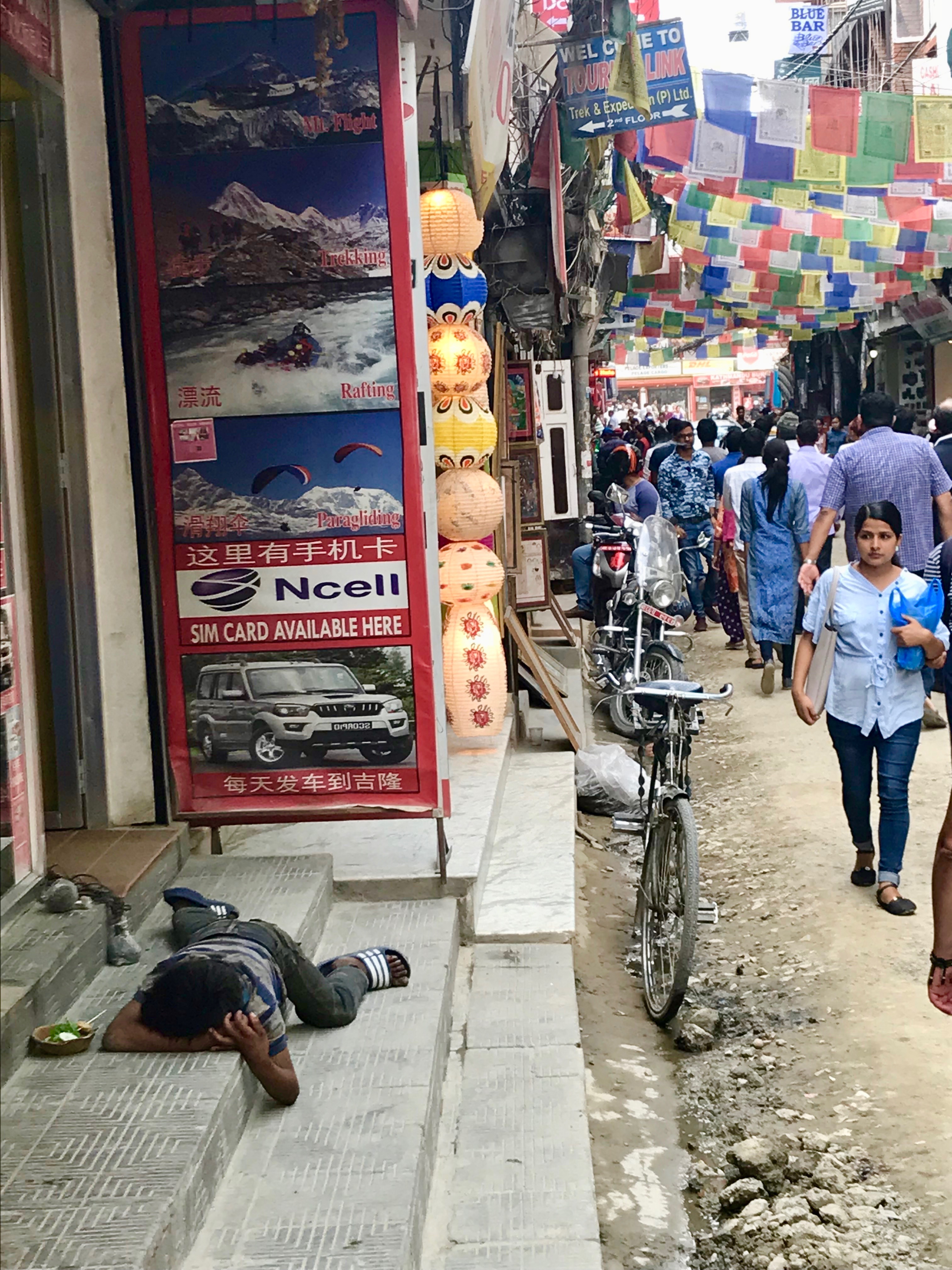
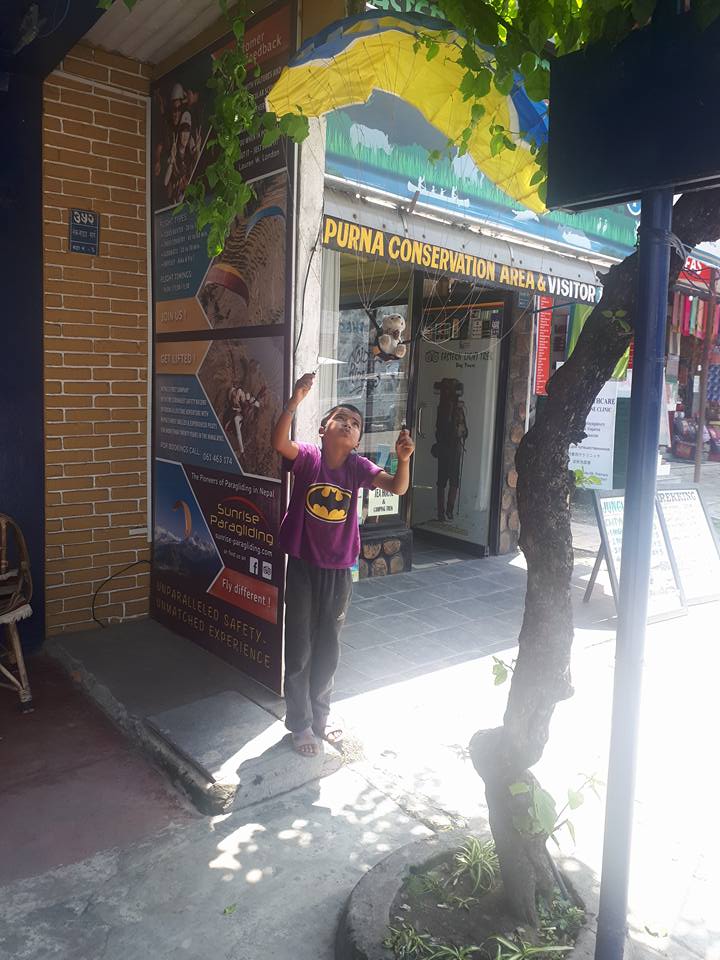
Ein Junge lag gestern mitten im Touristenviertel Thamel auf dem Gehweg. Dem Viertel, wo Verkäufer jeden scannen und auffordern zu kaufen. Auf diesem Gehweg vor diesen Läden lag dieser regungslose Körper. Das Gesicht am Asphalt. Ich schaute hin, überlegte und ging weiter. Wie alle anderen. Dann zog es mich zurück. Ich fragte im Laden, vor dem der Junge lag, was zu tun ist. Eine Nepalesin kuckte mich beschämt an, und erklärte mir, der Junge käme jeden Tag. „Er kommt also jeden Tag, um bewusstlos auf dem Gehweg zu liegen?“ fragte ich. Sie bestätigte. Ich besorgte was zu essen und zu trinken – Traubensaft, Kekse. Wasser. Und kontaktierte Diana Weinert. In Pokhara am Fusse des Himalaya lernte ich sie kennen. Sie kümmert sich ehrenamtlich und auf Eigeninitiative um Strassenkinder in Nepal. Sie gab mir den Kontakt zu einem Kinderhilfswerk in Kathmandu. Ich rief an. Skeptisch aber freundlich wiesen sie mich darauf hin das Dropcenter in Thamel anzurufen. Das wiederum bat mich, die Polizei zu kontaktieren. Zum ersten Mal in meinem Leben wählte ich 101 und nach einigen Minuten Verständigungsschwierigkeiten – „Engliiiiiiish please!“ kapierten sie, was los ist und wo sie hinkommen sollten. Ich wartete und beobachtete die vorbeigehenden Menschen. Eine Asiatin, im Superfashionistastil hielt an, zog ihren Lippenstift nach, machte ein Selfie und registrierte dann, dass vor ihr ein Junge mit verdreckt-zerfetzten Klamotten am Boden lag. Sie schenkte ihm gefühlt eine halbe Sekunde, glotze dann wieder ins Smartphone und ging schliesslich weiter. Eine ältere Dame schlug die Hände vors Gesicht und sagt „Oh my God, my heart breaks!“ Ihr Lover stand ratlos wie ein kleiner Junge hinter ihr. Ich forderte beide auf zu bleiben und zu helfen. Sie gingen weiter. Viele, die die Strasse entlang schlenderten, nahmen den Jungen wahr. Dann stoppte jemand und blieb. Ein Nepalese. Er weckte den Jungen auf. Benommen setzte er sich halbaufrecht hin, sein Gesicht kam zum Vorschein mit einer Wange, die von starken Asphaltabdrücken gezeichnet war. Ich sprach mit ihm, der Nepalese übersetzte. Er heisst Ruslan, ist 11 Jahre alt und hat keine Eltern mehr. Er ist Klebstoffabhängig wie so viele der tausend Strassenkinder in Kathmandu. Sein Blick war milchig-stumpf und schon wieder im Suchtmodus nach dem nächsten Zeug, das seinen Schmerz platt machen soll, darüber, dass familiäre Liebe ihm enthalten bleibt, und dass die meisten Menschen wegschauen. Während er die Herzenkekse verschlang, die ich ihm pathetisch mitgebracht hatte, ahnte er langsam, dass was im Busch war. Die Polizei kam und fuhr mit ihrer fetten Karre an uns vorbei. Ich rief hinterher, aber sie fuhren zu schnell. Dann ein Anruf von ihnen, wo ich denn mit dem Jungen sei. Ich bat sie zurückzufahren. Das machten sie und der Junge checkte die Lage und rannte fort. Erst wankend, dann immer schneller. Er liess Wasser und Saft stehen, die Herzchenkekstüte nahm er mit. Die Polizei kam zwei Minuten zu spät, die vier Beamten fragten mich, ob der Junge ernsthaft – also lebensgefährlich – verletzt sei. Ich sagte ihnen, dass er benommen und mit geschwollener Wange am Boden lag. „Ach, er ist süchtig. Da ist nichts zu machen“ erklärten sie nüchtern mit verschlossenem Herzen. Mitleid spürte ich nicht, dafür mir gegenüber etwas Hohn, dass ich mich um so“was“ kümmere. Ich versuche das nicht zu werten und weiss, dass es unglaublich viele dieser Strassenschicksale gibt. Da müsste die Regierung anpacken mit Geld, Power und Herz.
Diana Weinert aus Köln hat Power und Herz. Sie kommt immer wieder nach Nepal, um Strassenkindern zu helfen.
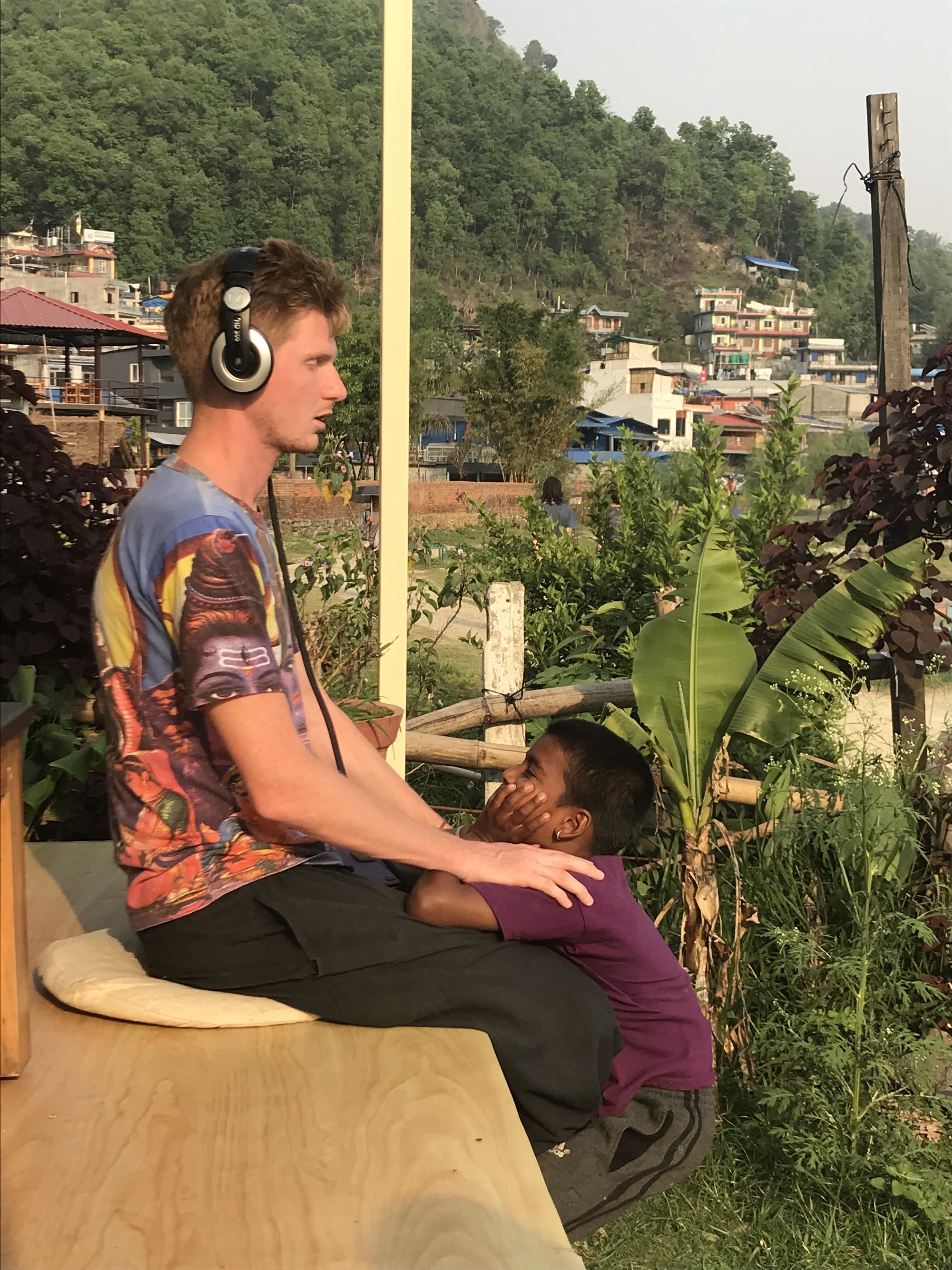
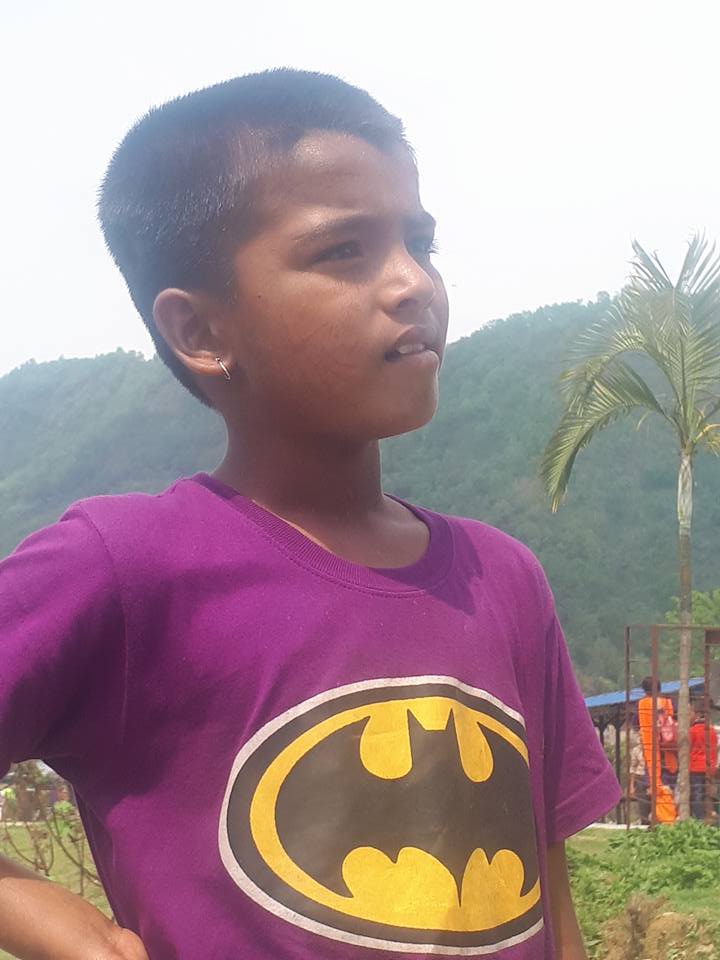
Jetzt verstehe ich sie umso mehr, warum sie sich einsetzt. Als ich sie vor einigen Wochen auf der Strasse in Pokhara kennenlernte, erzählte sie mir von Ashish, einem Jungen, der am See lebt. Seine Klamotten sind nicht ganz so dreckig und zerfetzt wie die von Ruslan und er scheint auch nicht drogenabhängig zu sein. Noch nicht. Er ist 9 Jahre und von zuhause fortgelaufen. Sein Vater ist alkoholabhängig, die Mutter mit einem anderen Mann fortgegangen. Ashish ist wie ein wilder Hundewelpe. Er lässt sich nicht bändigen. Gefühlt alle Langzeittouris, die sich in Pokhara niedergelassen haben, kennen den Jungen. Er hüpft auf Tischen, rennt umher, reisst einem die Kopfhörer von den Ohren, jammt mit den Hippies und schaut einen mit feurig-begeisterten Augen an.
Diana versucht seit vier Wochen diesen Jungen in ein Kinderdorf bei Pokhara zu bekommen, wo er leben und lernen soll. Sie tut alles dafür Ashish eine „Ausbildungs-Heimat“ zu geben, fuhr immer wieder in den letzten Wochen stundenlang Bus zum Dorf des Vaters, um Papiere zu besorgen, die sie für den Antrag einen Platz für ihn zu bekommen benötigt. An einem Morgen durfte ich sie dann zum Kinderdorf in Bhakunde bei Pokhara begleiten. Ashish sollte auch mit, der war aber wieder verschwunden. Wir gingen also ohne den Jungen dorthin.
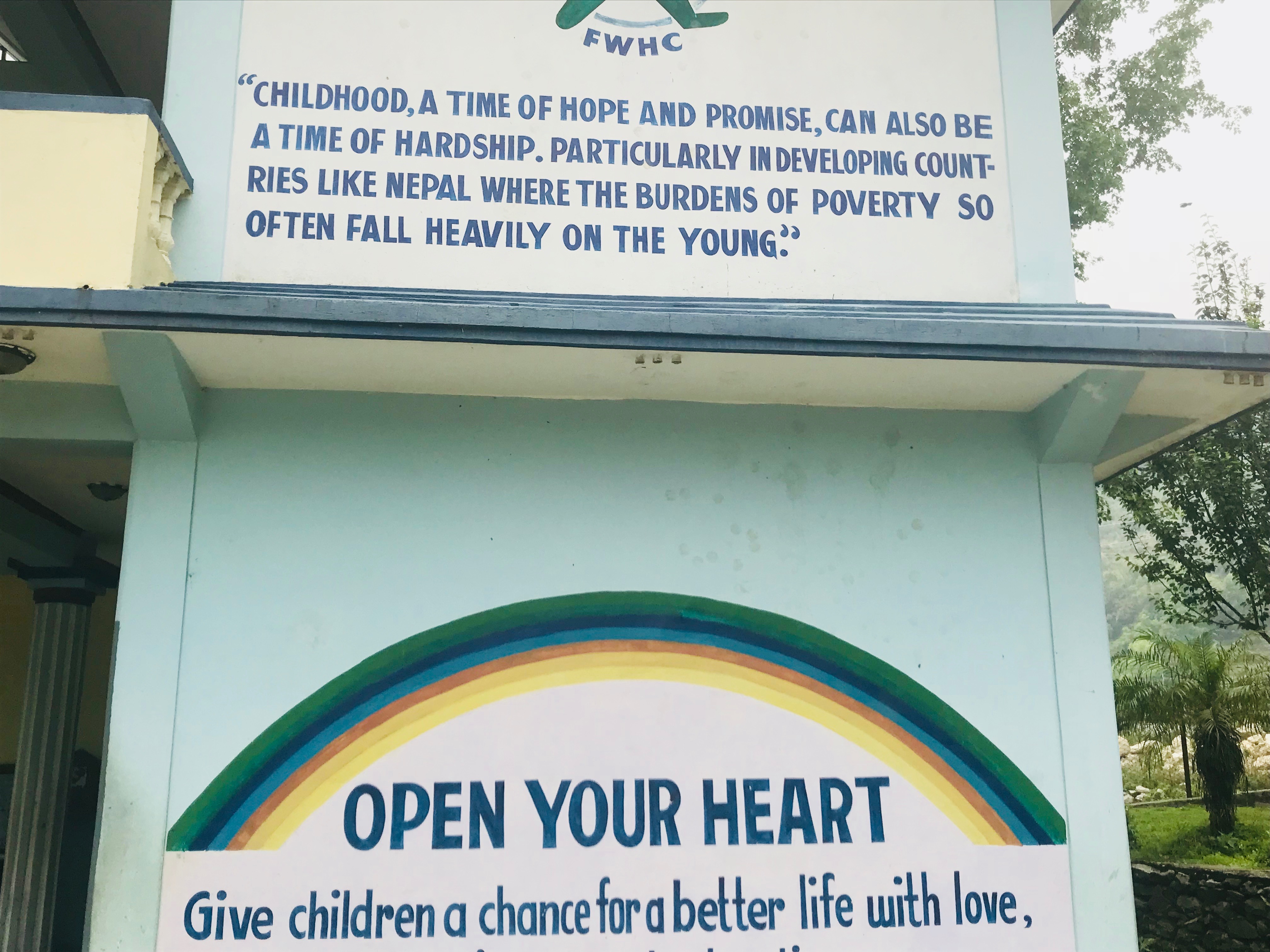
Wenn er wüsste wie schön es dort ist, wäre er nicht schon wieder abgehauen. Ein Deutscher betreut dieses Kinderdorf mit seinem „Freundeskreis Nepalhilfe e.V.“ Gelegen in schöner Landschaft mit Garten, Gemüseanbau und Tieren, leben hier aktuell 80 Waisen, Halbwaisen und Kinder aus schwierigen Elternhäusern. Ein guter warmherziger Ort, der den Kindern eine Heimat gibt, von wo aus sie nach Klasse 8 gestärkt und vollgetankt mit wertvollem Wissen weiterfliegen können. Oft auch mit Medaillen und Pokalen. In Karate sind sie spitze. Wie eine 16-Jährige Nepalesin, die mittlerweile in Pokhara lebt, aber regelmässig zu Besuch kommt, um Lehrer Betreuer und Kids wiederzusehen. Es ist eben Familie. Bedenkt man, dass die Hälfte der über 14-Jährigen Nepalesen Analphabeten sind und nur die Hälfte der eingeschulten Kids den Grundschulabschluss schafft, ist das Kinderdorf eine grosse Chance.
„Wie benehme ich mich mit den Nachbarn?“ ist der Unterrichtsstoff
Wir haben die Klassen besucht, alle waren total vertieft im Unterricht: Sie lernen: „Wie benehme ich mich den Nachbarn gegenüber“ oder Wertschätzung: „Wie führe ich ein Gespräch mit meinem Partner?“ Ich dachte, wenn sie aus so krassen Verhältnissen kommen, sind sie vielleicht schwer zu bändigen. Das Gegenteil war der Fall. Sie hatten so Bock aufs Lernen. Nach dem Pausengong dauerte es noch zwei Minuten bis sie die Bücher zuschlugen. Auf dem Schulhof zeichneten sie in mein Heft, einer nach dem anderen. Bangitay, ca. sechs Jahre, zauberte mit dem Bleistift ein Mädchen aufs Papier, wunderschön. Ich fragte ihn, ob er mehr malt und mir was zeigen kann…Am Ende der Pause steht er schüchtern weit von mir entfernt in der Ecke und hält ein Bild in seiner Hand. Ich gehe auf ihn zu und sehe wieder eine Zeichnung von einem langhaarigen Mädchen mit geschwungenen Formen.
Ashish ist im Kopf schon wieder unterwegs
Diese Kinder sind besonders.Vielleicht haben sie begriffen, was es bedeutet hier lernen und leben zu dürfen.
Nachtrag 2021: Ashish geht jetzt in die Sahara Academy, lernt fleißig und spielt viel Fußball!
Wenn ihr das Kinderdorf mit den Kids supporten wollt, dann könnt ihr spenden oder Patenschaften übernehmen oder sogar Mitglied werden im Verein. Ihr findet alles, was ihr wissen wollt auf deren Seite und ein schönes Video von der Atmosphäre.
Wenn Diana nicht gerade Strassenkindern hilft, dann bastelt sie Reisen zusammen, um Menschen Nepal näher zu bringen. Mit Kinderdörfern, Homestays und Gegenden, die Tourifrei sind. Informationen zu Dianas Reisen stecken hier.
Alleine reisen ist toll. Man hat die Gelegenheit noch einmal gründlich durch eine Charakterschule zu gehen und lernt sich immer wieder neu kennen. Ich liebe es, auch mich immer wieder meinen Ängsten zu stellen. Aber für mich gibt es Grenzen. Während ich keine Probleme damit hatte, alleine mit Zug und Nachtbus durch Indien zu zuckeln, zitterten mir die Knie bei der Vorstellung alleine im Himalaya zu trekken. Einige sagten mir, ich wäre ein Schisser. Ja, die Vorstellung alleine durch die Berglandschaft zu laufen, fand ich mega, aber die Info, dass alleine trekken das Einzige ist, was man in Nepal NICHT machen sollte, bremste mich. Auch die Info, dass Menschen verschwinden und/oder in den Bergen sterben. Seit Februar fehlt jede Spur von einer Französin, die alleine los ist zum bekannten Poonhill Trek. Für mich war klar: Alleine mache ich das nicht. Durch Zufall traf ich Trijntje aus meinem 10 Tages Vipassana Meditations Kurs wieder. Mit 18 Jahren ist sie schon alleine den Annapurna Circuit gelaufen. Jetzt ist sie 19 und möchte im Sommer mit ihrem Studium beginnen: Lehrerin werden für das Fach Lebensanschauung / Levensbeschouwing. Dass sie vorher noch einmal 5 Monate alleine reist, ist perfekt, um ihre Gardinen noch weiter zu öffnen. Trijntje liebt es nicht nur viele Menschen kennenzulernen, sie steht auch total darauf, sich ihren Ängsten zu stellen am besten mit Abenteuern. Als ich sie treffe, ist sie dabei, eine Wanderung zu planen in eine der isoliertesten Gegenden Nepals, hochgelegen im Nordwesten. Mit Zelt. Ich bin beeindruckt und deswegen bekommt sie einen Platz hier. Nach dem Gespräch beschliessen wir, dass wir erstmal zusammen den berühmten Poonhill ansteuern und Trijntje dann alleine weiter zum Annapurna Basecamp wandert, dem ABC, als Warm Up für ihren abgefahrenen Wunsch-Trek.
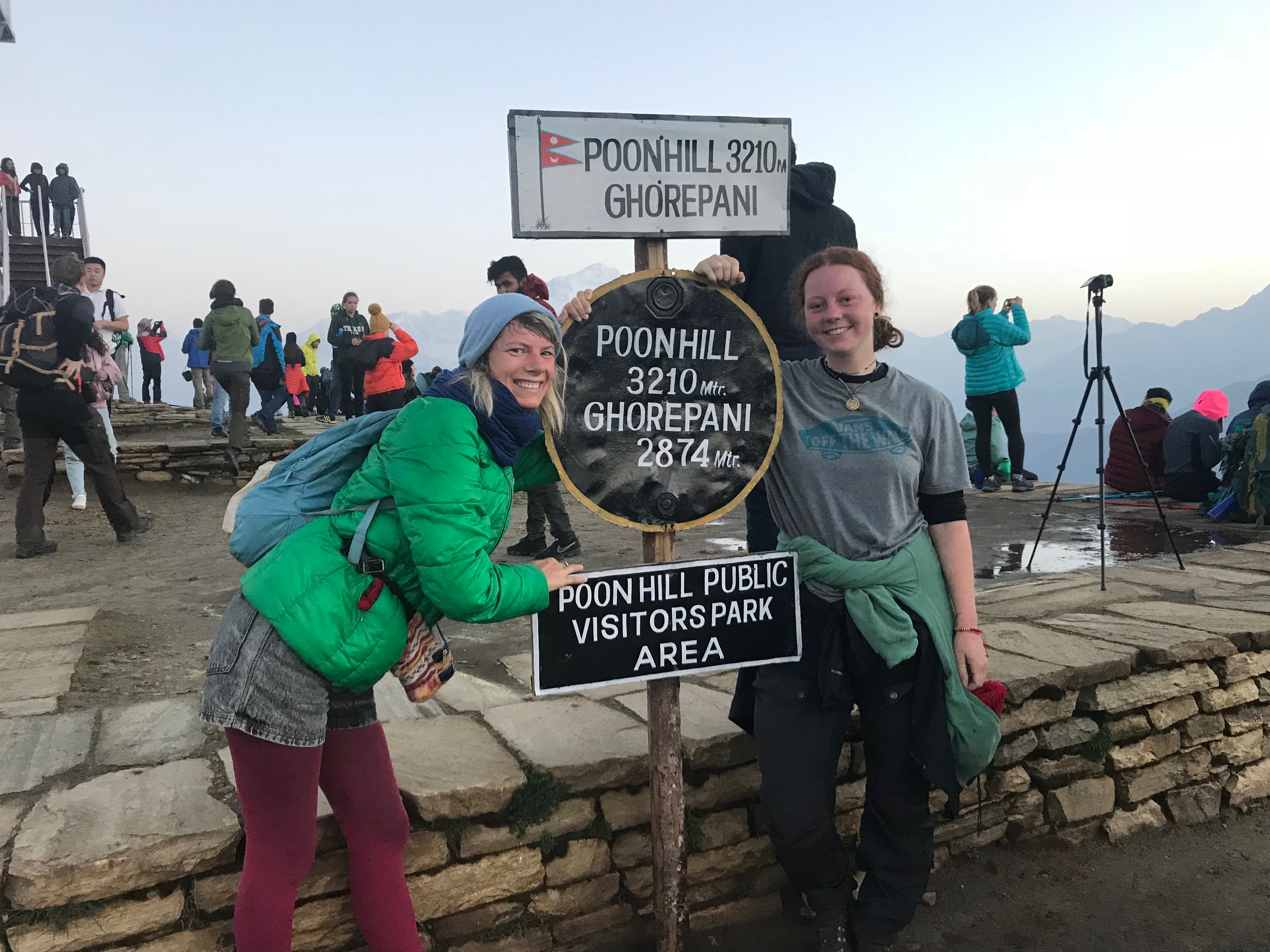
1 Woche später nach dem Gespräch am Poonhill auf 3210 Meter Höhe. Trijntje ist der perfekte Trekkingbuddy für mich.
ENGLISH
Traveling alone is wonderful. You have the possibility of getting to know yourself better in different situations. It is a school for facing fears and shaping your character. I love it, but I have my limits. I had no problem traveling alone by nightbus and train in India, but the idea of trekking alone in the Himalayas in Nepal made me trembling. Some people said that I worry too much, but as I got the information, that only one thing you should not do in Nepal is Trekking Alone, I really feard it. I mean I would love to walk alone through the mountains, but this information and the one about people that are still missing and or dead, were big warnings for me. Since February a French woman, that was very experienced with trekking is missing, she did the popular Poonhill Trek. So I came to the conclusion I will not go trekking alone. Per coincidence I met Trijntje again, she is from my Vipassana Mediation course that I did for 10 days. With 18 years she did the Annapurna Circuit alone. Now with 19 she is going to study soon. In summer she will start to become a teacher in Levensbeschouwing, means worldview. That she is traveling the world now for 5 months is perfect to expand her horizon even more. Trinjntje loves challenging herself and overcoming fears. She is very cool with the world. When I met her in Pokhara she was planning her trek to a remote area with a tent. This time she looks for a partner. I am impressed. After the talk we decided to go together to the popular Poonhill Trek and Trinjntje will stay in the mountains alone for doing the ABC, Annapurna Basecamp as a warm up for her maybe upcoming extraordinary trek. I could not have imagined a better buddy than her.
INTERVIEW
Yvi: Who are you?
My name ist Trijntje Van de Wouw. I am living in the Netherlands. I am travelling in Nepal starting 1,5 months ago and I have like 4-5 months still to travel.
Who I am? That is always a good question. I am a girl who likes adventure, nature, poetry, words, outdoor, meeting people and have nice conversations.
Yvi: When it comes to poetry and words, which sentence do you have in mind now? Maybe you just read something and you thought: “Oh that is great!”
Actually there is one coming in my head, because I just read it 2 days ago. It is “Your soul is the whole universe.” (Trijntjes version from Your soul is the whole world in Siddhartha written by Hermann Hesse). I really like that one, because it is true like everything is inside of you, it is all inside the frame of the body, everything is happening there. If you are feeling good or sad, it is all inside your body.
Yvi: What is your current mood?
My current mood is not so good, because I have been thinking a lot the last 2 days and now I realize how calm and relaxed I was the days before. Now I feel very busy in my head and a little bit anxiety of what I going to do next, about the trekking I want to do.
Yvi: This upcoming project gives you a lot of worries, what is it?
Yeah it is fear. I want to do something that I really really want to do. Trekking in a remote area of Nepal.
Yvi: Why?
I always want to do something unique and to challenge myself more and more. Because if I challenge myself and I do it, I feel good. Maybe it is a little bit my ego, but I also want to go to this special area, because of the Tibetan Buddhism. But I am fearing it, because I don’t want to go alone, and I know I can just go there and meet people just as I did it with the Annapurna Circuit, but in this area named Dolpa there are not a lot of people walking, I don’t know if it is smart to go there, and it is also camping – you don’t meet people for 6 days you need to have your own food – it is a lot for someone who is not so experienced as me.
Yvi: You have already faced some fears in your young life with 19 years. When did you do the Annapurna Circuit?
I just became 18. I had to go for an internship for my study and I just wanted to do something really cool and challenging again. I went on an internship on a rafting company, an outdoor activity company, and after that I had time to travel and so I wanted to do the Annapurna Circuit, but I did not have a lot of fear for that.
Yvi: Why challenges like that?
I had a good childhood for sure, but I struggled with some things and maybe this is also something that makes me stronger, because I know what real fears are, maybe. I had OCD (obsessive-compulsive disorder), I thought a lot, I was overthinking, it is a mental disease, you are obsessed with thinking with things…. When I was younger I was obsessed with counting stairs for example and if you do not count than something is happening… Then I grew over it, and it was gone. But with 14 – they say there are things that can trigger you and let it come back – so at 14 I had it again, much worse. In my head I had to think about things obsessively, it was awful! I did not tell anyone, it was just in my head for 3 years. I did not dare to tell anyone, because I thought nobody will understand me. In that time I had lots of fears and I became stronger and stronger, because I was overwilling this mental thing. And because of that I dare to do a lot of things.
Yvi: So how was the Annapurna Circuit Trek – alone?
Amazing, I started alone. The first 3 days I was alone, there were some people on that trail, but I was, like “Oh that people are not so nice, let’s walk alone, I will meet best people later maybe”. So first 3 days I was alone, it was ok. But after that I got fear like telling me ”You go to the 3000 meters, you need to meet someone, you can’t go alone“. And after few days I met the best people ever, we had the best journey, we walked together for 2 weeks, and we had so much fun. I like the lifestyle like waking up very early, have breakfast and then walk the whole day with great people and then you have the best conversations, because you have time, you walk and around you is the best nature and then you stop walking around 4 pm in the afternoon and then you play games and eat and go to bed early. I love that!
Yvi: Have you ever been in a risky situation where you thought “Ok now it’s enough!”?
Yeah on the Annapurna Circuit Trek one time when I walked alone the first days. I got a little bit lost and then I asked a Nepali man “Hey where should I go?” and there was a dark tunnel in front of me and he walked me through it and he took my hand and he said like “Oh kiss, kiss” and then I was like “Shit: I have to be alert, this is not good.” Nothing happened luckily.
Yvi: The feeling must be great to do the Annapurna Trek, overcoming fears and more and more overcoming fears.. how come that you are with 19 years also at something like Vipassana (Buddhist Meditation)? It is very strong, it is a heavy discipline, 10 days of sitting and more than 10 hours a day meditation, I mean with 19 years you travel to Berlin, you go to Berghain and to big parties and not to Pokhara in the mountains to meditate. How come?
It is strange. I just feel attracted to these things. I wanna find out what makes us humans feel good. I developed interest in Buddhism after I had travelled to Thailand and Nepal with 18, and I found out that the Buddhist philosophy is the best way to calm my mind. Because I had this overthinking and I was always looking for a solution. I found out that how the Buddhist do things like „Just don’t be attached to something, live in the present“ these kinds of things helped me. So I got to Vipassana, and I found out that this technique is really a thing for me to observe my thoughts, and let them flow away. It is just my curiosity. I heard a lot people saying: „You are only 19 what are you doing? You are an old soul!“ It is an interest of me and I follow it!
Yvi: If you would send to your parents a postcard from here right now what would you write?
Huh, I am getting almost emotional. Oh shit. I have tears you will see it on the cards, the drops. I will say that everything is going good here. That I learn a lot, I learn every day. That I found the Vipassana Meditation Technique that it suits me perfect with my overthinking, and that I am living in the present moment a lot. That I think about them also a lot, distance and time it makes you see things clear. Now I see also – I mean I already knew it – but I appreciate more and more how good they are to me and to everyone and I hope they are happy, that is the most important. For me everything is okay here, but I know that their lives are so different with hurry and doing things that they actually don’t want. I hope that they are happy and they should do what their heart is saying..
Yvi: Thank you so much, Be Happy!
Trijntje: Yes, you too!
Hier geht es zum Interview auf SoundCloud. Trijntje talks on SoundCloud with me about her experiences.
Sí Sí Sí … Jessica Walker ruft dieses Ja Ja Ja so begeistert, wie wenn gerade das entscheidende Tor bei der Weltmeisterschaft fällt. Sie kuckt dabei mit weit aufgerissenen Augen, eine Hand geht zum Himmel, es ist ihre Reaktion auf das, was gerade vor ihr passiert. Jemand erzählt etwas über sich selbst, mal laut mal leise, pausierend und dann radikal offen.
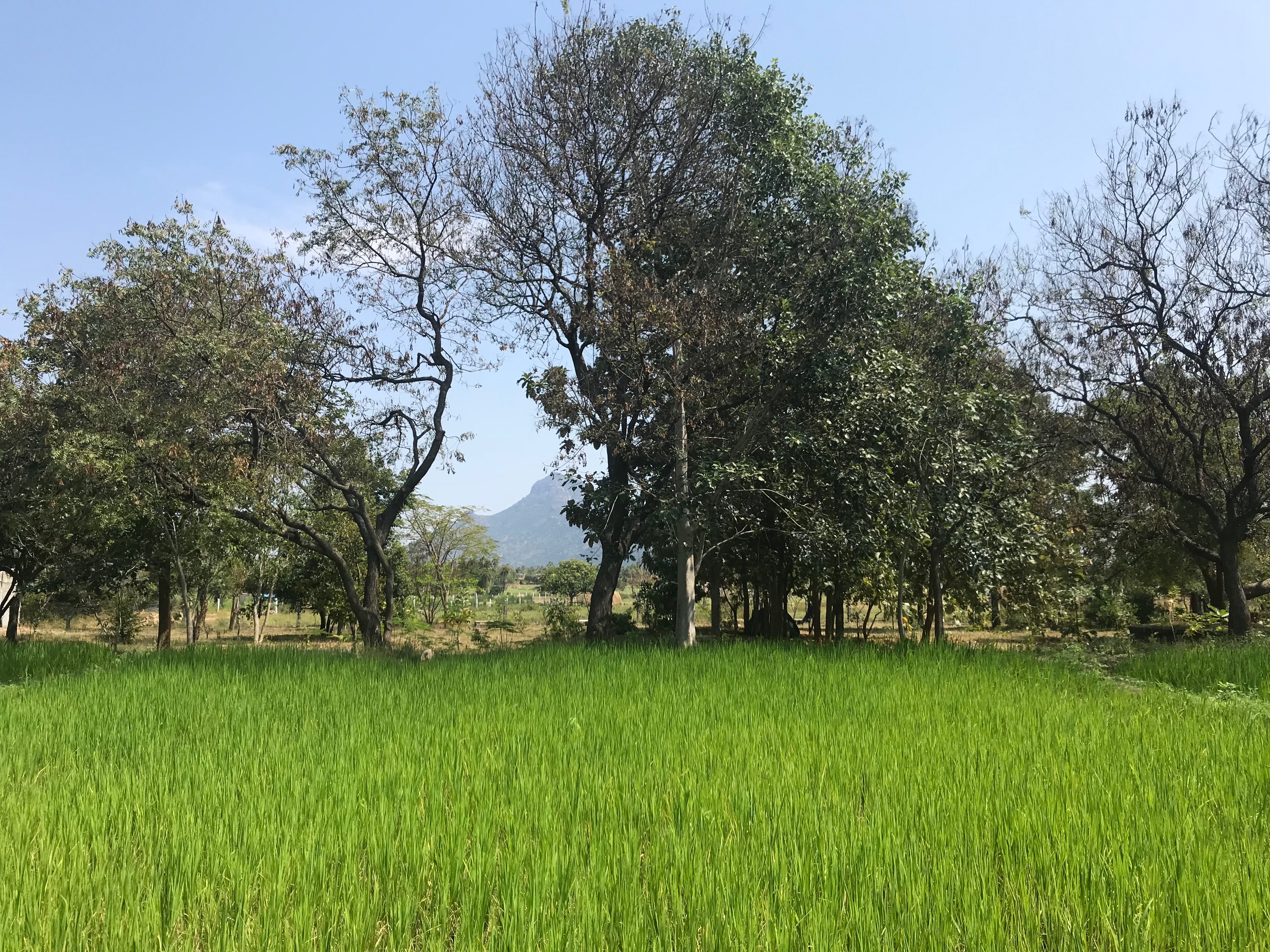
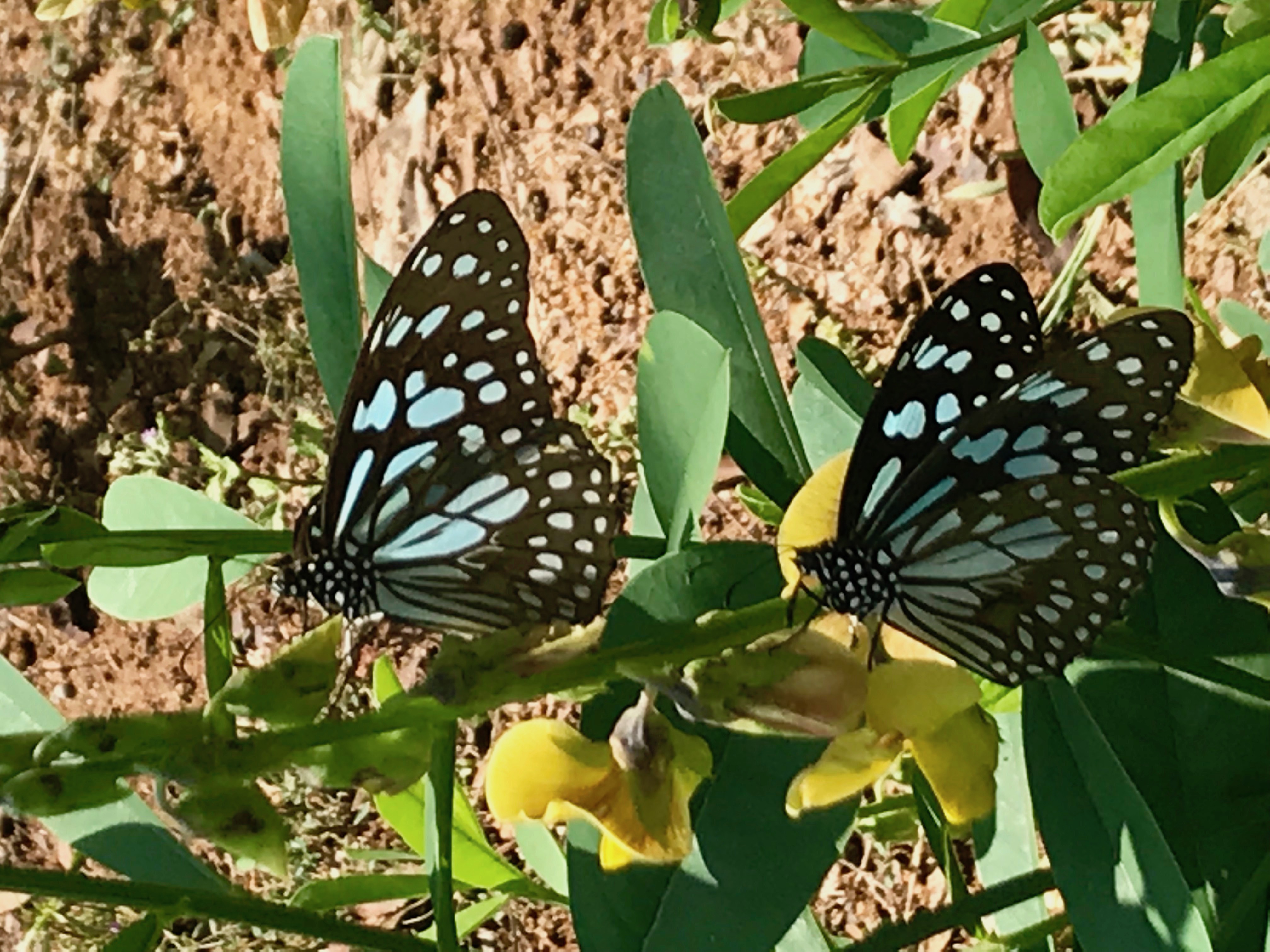
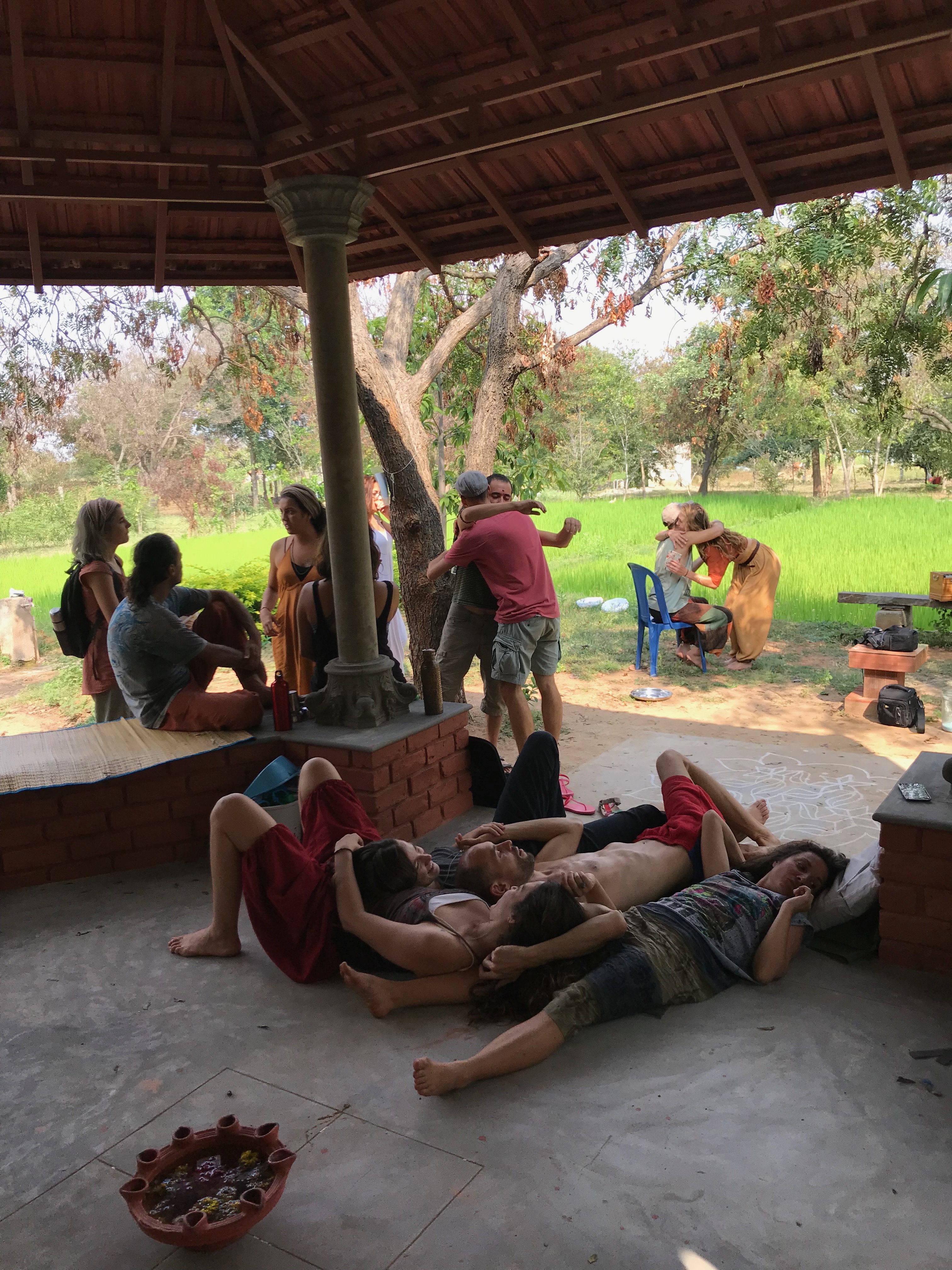
Jessica ist vieles, vor allem ist sie Theaterschauspielerin und Regisseurin. Vor fast 20 Jahren gründete sie in Barcelona die „Laboratorio Escuela“ eine Schule für experimentelles Theater. Hier erforschen sie Körper, Geist und Beziehungen. Das machen sie auch einmal im Jahr in Indien mit dem Soulfest – Arunachala Bhakti Lab in einem kleinen familiären Ashram „Sri Anantha Niketan“. Er ist umgeben von sattgrünen Feldern, in denen Schmetterlingsschwärme wild umherflattern und sich durch keine Laune gestört fühlen – hier sind alle Gefühle herzlich willkommen.
Schlafen in der Shiva Hall
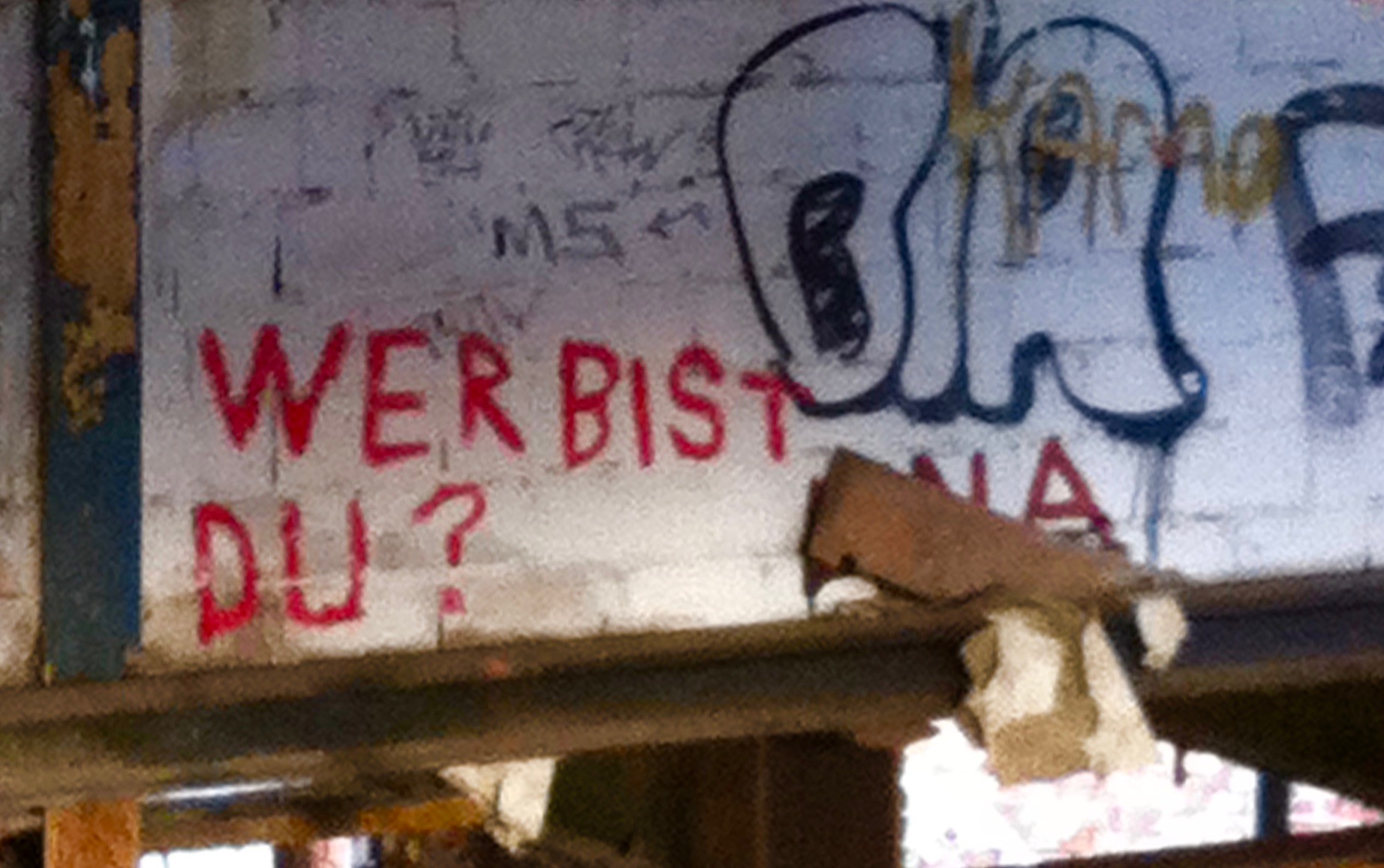
Im Hintergrund macht sich der berühmte heilige Arunachala Berg breit. Er gilt als Manifestation von Shiva, einer der Hauptgötter des Hinduismus, der auch als Zerstörer des Ego gilt. Das Ego, was im Yoga als die Ursache für Angst und Kopfmist ist. Das uns dazu bringt lieber unglücklich zu bleiben, statt was zu wagen, das uns vorgaukelt lieber ein Leben lang die beschilderte Hauptstrasse entlang zu zuckeln statt mal einen Weg einzuschlagen, der ins Ungewisse führt. Tiruvannamalai ist wegen Shiva Pilgerstadt und wegen Ramana Maharsi, dem Guru, der dort 17 Jahre lang in einer Höhle meditierte und sich fragte: WER BIN ICH?
Also wer bin ich ohne mein Ego: Ohne meinen Job, meine Karre, mein Haus, meine Klamotten, meinen geilen Body, wer bin ich ohne Plattenvertrag, ohne Kohle, ohne zehntausend Instagramfollower, ohne Facebooklikes, ohne Freunde, ohne Partner, ohne Familie? Was bleibt da übrig? Ich stelle mir diese Frage öfters auf der Reise, weil ich ja alleine durch die Welt tingle und temporär ohne Wohnung und Job bin. Also gefühlt nackt. Ich merke wie mein Ego zittert und schnaubt und es oft nicht lustig findet, immer wieder fernes Neuland zu betreten.
„Ich sage dir, was Freiheit für mich ist: keine Angst zu haben.“ – Nina Simone, Musikern
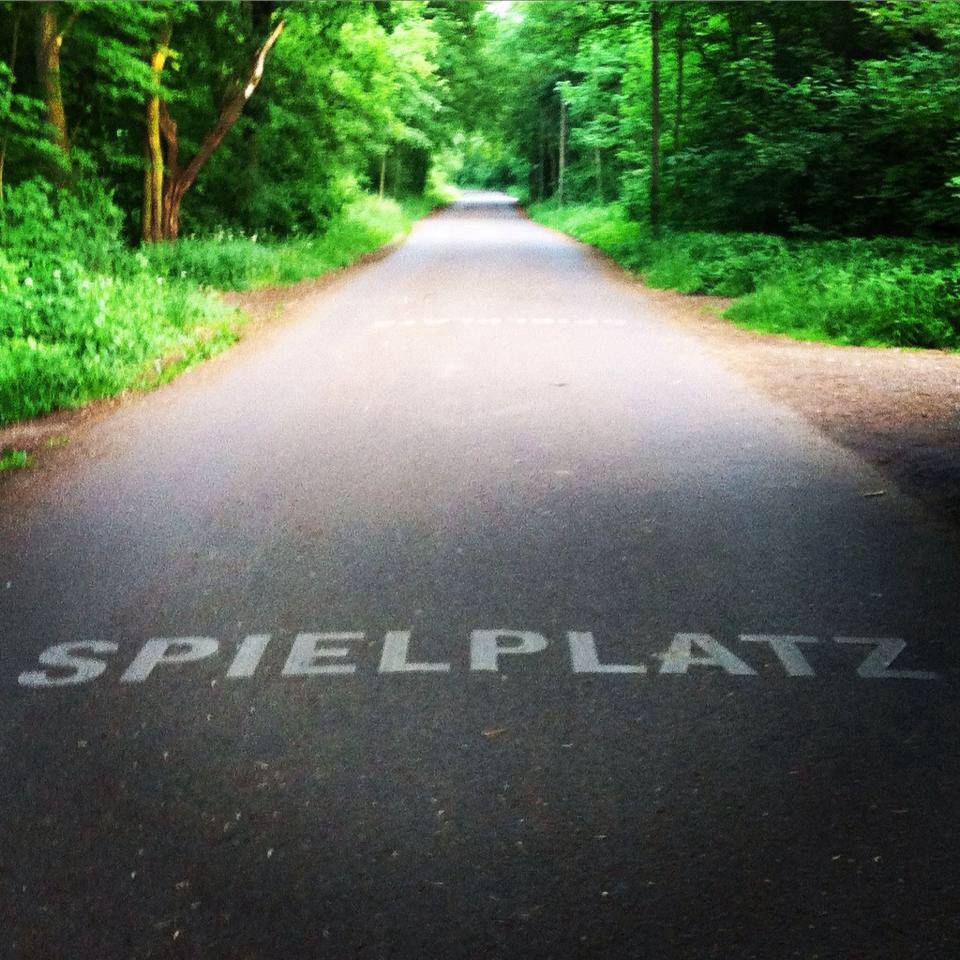
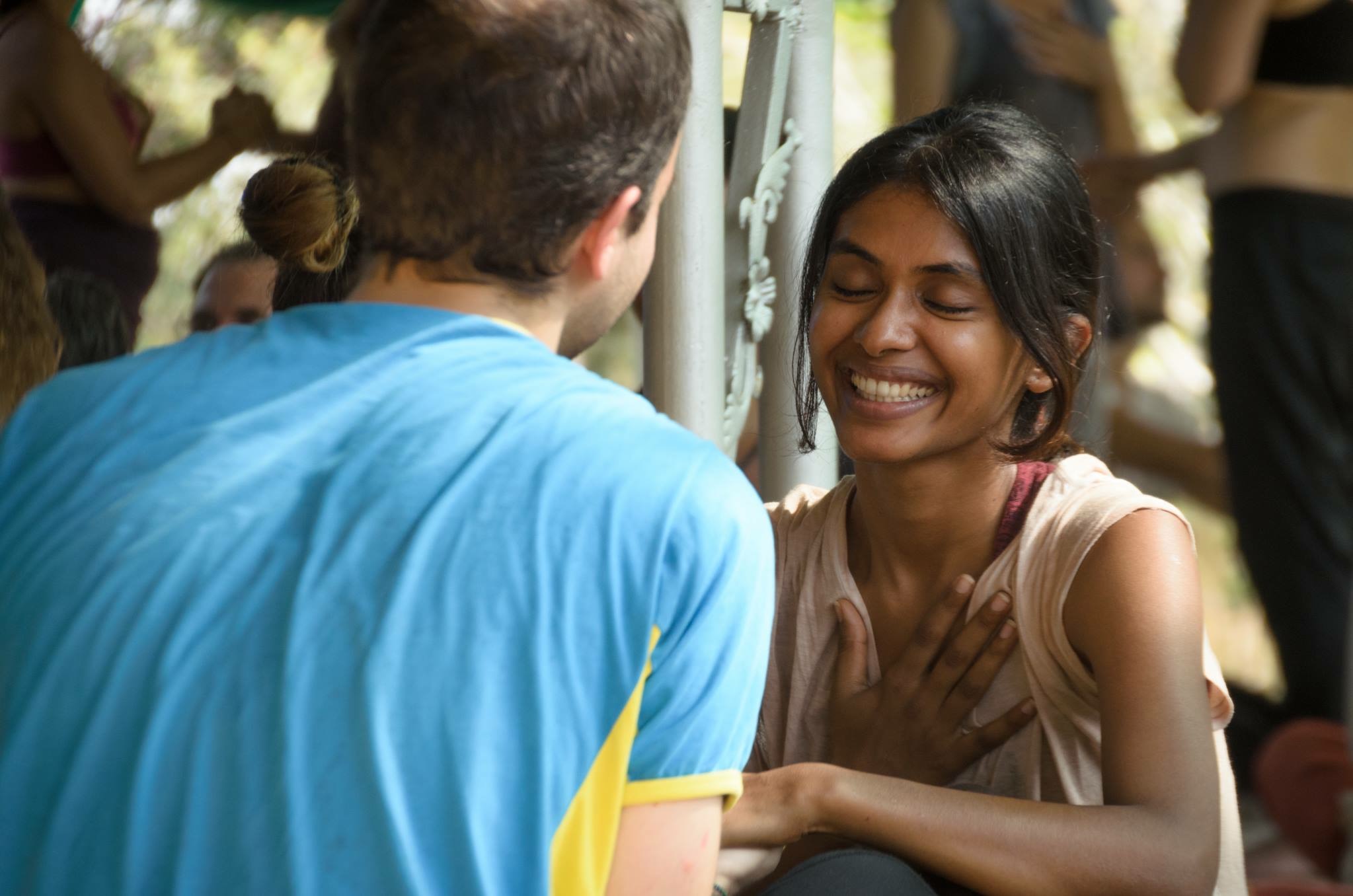
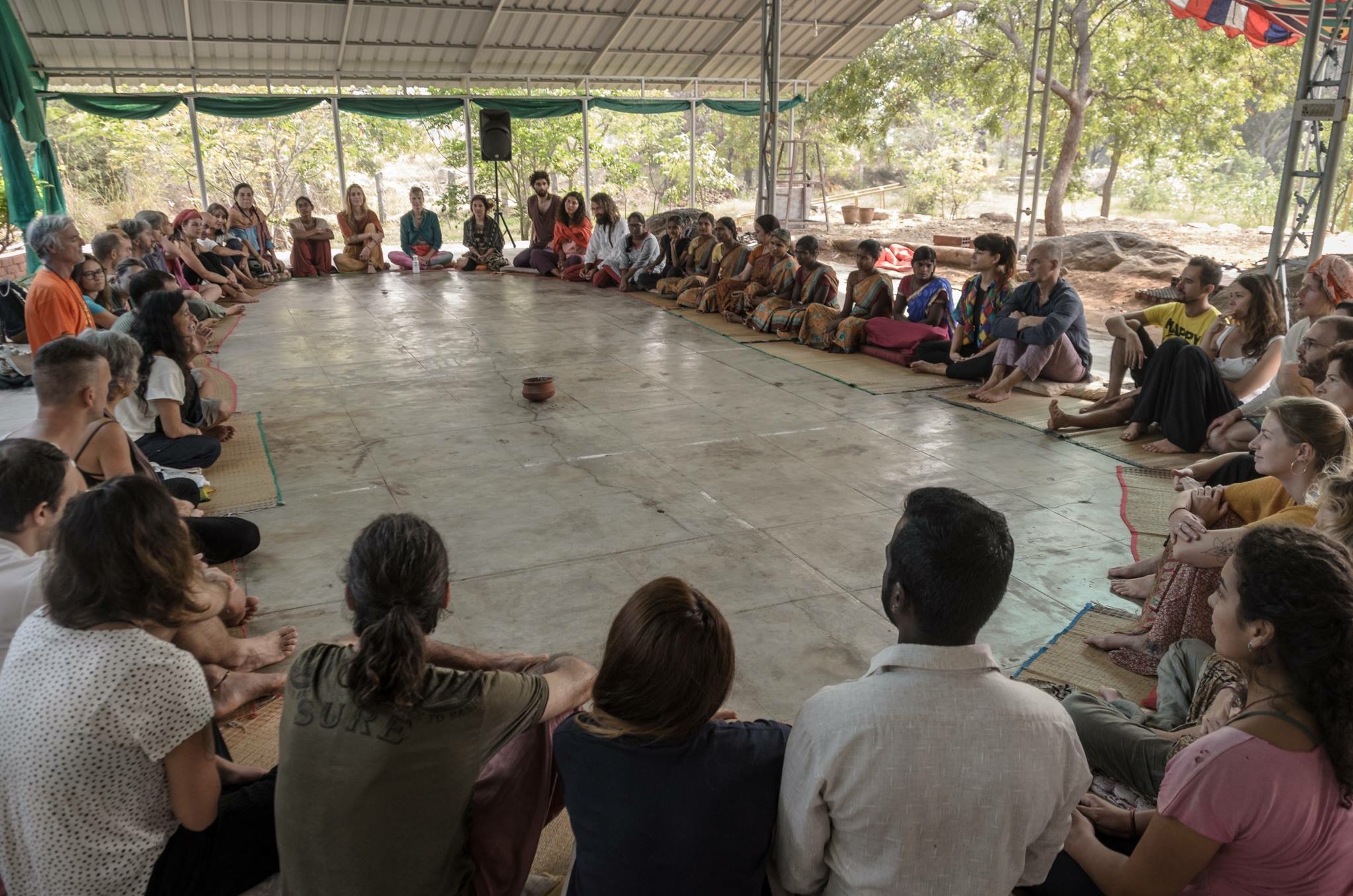
Vom Soulfest erfuhr ich in Goa. Da hatte ich schon gut an meinen Ängsten auf dem Ecstatic Dance Festival geschraubt. Der Veranstalter sagte zu mir: „Oh du findest es beim Ecstatic Dance Festival krass, dann geh mal zu Jessica Walker, da geht es ans Eingemachte!“. Und weil ich seit einigen Jahren auf Eingemachtes stehe, wagte ich mich dorthin. Zum Glück warteten weder Esoschischi noch Exzesse auf mich – denn mit beidem kann ich nichts anfangen. Das Soulfest ist ein Spielplatz, bei dem wir uns trauen dürfen uns zu zeigen, wie wir sind. Mehr nicht. Weniger auch nicht.
Am ersten Tag geht es direkt los mit wem Fremden zu tanzen – improvisiert. Ich fühle mich wieder wie mit 14 als ich lieber auf den Boden schaute und nur alleine im Zimmer die Musik aufdrehte. Etwas Scham quetscht sich dazu, aber sie vergeht nach einigen Minuten. Ich merke, wie steif wir als Erwachsene unterwegs sein können, als Kinder rennen wir noch völlig unbedarft auf andere zu und machen wonach uns ist, als Erwachsene schämen wir uns, sind blockiert und müssen uns erstmal Alkohol oder sonstige Mittelchen einverleiben, um locker zu werden. Wir haben Angst davor uns zu blamieren, davor, was die anderen über uns denken könnten. Deswegen schiebt unser Ego lieber einen Vorhang vor unseren Gefühlen, Impulsen und Wünschen statt uns ehrlich sein zu lassen, was wir gerade sind. So ein Spassverderber – und dann verklemmt in der Ecke stehen und auf die Frage „Wie geht’s Dir?“ Ein „Guuuut!“ antworten und vom verkniffenen Mund verraten zu werden, wie es wirklich geht. Scheisse.
Das soll jetzt keine Aufforderung sein, dass wir jedem sagen sollen, was wir fühlen und wie wir uns dabei fühlen… beim Soulfest rennen wir auch nicht rum und binden jedem auf die Nase, dass man gerade eine Wassermelone im Hals stecken hat, aber in einigen Momenten ist Platz: da können wir was sagen oder performen. Sí Sí Sí … Jessica ist immer voll angeknipst und hört zu, alle anderen auch, und oft erkennt man sich selbst wieder durch Empathie. Wir sind schliesslich alle Menschen mit einen Farbkasten an Gefühlen. Bei mehr und mehr Menschen hat der Gefühlskompass aber Wackelkontakt oder ist völlig Schrott. Casper singt in dem Song Keine Angst „Ich fühl mich wie ich fühl, weil ich nix mehr fühl.“ Durch Schiss vor „negativen“ Gefühlen wie Angst werden sie verdrängt und das Innenleben zu einem dezenten grau glattgebügelt. Wer nicht checkt, dass Neid, Scham, Trauer, Wut und Angst zum Leben dazugehören und gefühlt werden müssen, darf sich nicht wundern, dass auch irgendwann Happy Moments ausbleiben. Freude ohne Trauer ist nicht möglich. Erst heulen, dann lachen wunderbar.
Nähe entsteht durch ehrliche Gespräche. Mit der indischen Schauspielerin Anahat war es immer spannend.
Beim Soulfest geht es um Verbindung zu uns selbst und zu den anderen. Und um Ehrlichkeit. Den anderen nichts vormachen. Am Anfang urteile ich über die anderen Teilnehmer wie ich es auch in Goa gemacht hatte. Und wieder merke ich bei näheren Gesprächen, dass niemand so ist, wie ich dachte. Schon in Goa sass ein vermeintlicher Happy-Sunnyboy vor mir, der meiner Meinung nach selbstbewusst beim Tanzen war und ein Frauenheld. Es kam raus, dass Tanzen ihn total verunsicherte und was Liebe angeht, schwamm er in Kummer. Weil er sich selbst eine Zeit lang nicht ausstehen konnte, hatte er seine Ex-Freundin vergrault. Das sind drei Jahre her. Es gibt kein Zurück. Er liebt sie immer noch und will keine andere. Während er mir das alles erzählt, weint er Rotz und Wasser. Ich bin berührt von so viel Ehrlichkeit und finde das richtig stark. Beim Soulfest passieren ähnliche Dinge. Männer erzählen, wie sie Frauen sehen, dass sie Angst haben, vor Beziehungen vor sich selbst, nicht wissen wie sie das zusammen bekommen sollen – die Partnerin als beste Freundin, Mutter, Liebhaberin – das sind ja drei Dinge auf einmal und oft zwei Dinge zuviel. Frauen erzählen, dass sie gemocht werden wollen und dafür auch mal vorgeben etwas zu sein, was sie nicht sind. Es kommt heraus, dass fast alle Angst vor Ablehnung haben, nur gehen wir unterschiedlich damit um. Authentisch zu kommunizieren, also zu sagen was Sache ist, ist für viele schwer. Das braucht Mut, nicht jeder hat ihn bzw. ich behaupte: nicht jeder möchte sich die Mühe machen ihn aufzubringen. Einige ziehen sich zurück, andere wählen Auswege. Sie fangen an anderen etwas vorspielen. Das wird dann gerade in romantischen Geflechten schwierig, weil das ja der Ort sein soll für Vertrauen, Offenheit und Ehrlichkeit. Und dazu gehören auch Diskussionen und unterschiedliche Meinungen. Ich selbst habe eine fast zehnjährige Beziehung geführt, in der es nur drei Mal Streit gab, zwei Mal davon wegen Nudeln und Pizza. Das ist lange her und aus heutiger Sicht weiss ich, dass hier stark was im Argen lag. Hinter dem Nudel- und Pizzaberg steckten viele Gefühle, die nicht kommuniziert wurden, und die in erster Linie nichts mit Nudeln und Pizza zu tun hatten. Damals hatte ich keine Ahnung von all dem, ich war wohl selbst konfliktscheu. Am Ende stand ich da mit einem zerfetzten Herzen, das nachhaltig klarkommen musste mit: Liebesschwüre bis zur letzten Sekunde treffen auf Täuschen, Lügen und Betrügen…
Warum ich das so offen schreibe? Weil auch das zum Leben dazugehört. Und weil solche Geschichten immer mehr werden. In den letzten Jahren habe ich das Gefühl, dass Hollywood in unsere alltäglichen Leben eingezogen ist mit dem Drama von einstürzenden Kartenhäusern, stillen Abgängen und heimlichem Davonschleichen. Im Epilog erklingt dann manchmal noch ein Satz nach: „Ich liebte dich so sehr, deswegen konnte ich dir die Wahrheit nicht sagen.“ Unehrlichkeit, Lügen und Betrügen geschehen niemals aus Liebe, weder zu sich selbst noch zu anderen. Sie entstehen aus Angst und Feigheit, sind egogesteuert und damit das Gegenteil von Liebe.
All das hinterlässt nur Verletzungen, die sehr tief sind und sich wie eine Schneelawine fortsetzen können. Denn der, der aus Angst vom anderen betrogen wurde, hat nun auch Angst und aus Angst wieder so verletzt zu werden, wird er/sie vielleicht das nächste Mal selbst zum angstbesoffenen Betrüger-/in….oder man wird mit seiner neu erworbenen Angst vom anderen Angsthasen als uncool abgestempelt. Und so entsteht all der irre Gefühlszirkus, der nicht nur hippe Grossstädte überflutet, sondern längst auch in die Keller der Kleinstädte gezogen ist. Oder in die Kleingärten. Bevor ich auf meine Reise ging, steckte ich plötzlich wortwörtlich wieder in einem Garten des Irrsinns, der so gar nicht von mir verursacht wurde, sondern von jemand, der behauptet er sei abgestumpft – ein abgestumpfter Angsthase, der dieses „Ich fühl mich wie ich fühl, weil ich nix mehr fühl“ leierte…für ihn ein angeblicher Freifahrtschein für Lügen und Betrügen, mal wieder. Blitzschnell habe ich mich vom Acker gemacht. Ich bin ausgestiegen aus all dem für eine Zeit, denn mein Mitgefühl für all die Angst-Games ist fast leergelaufen, mein Tränenreservoir dagegen nicht.
Auf dem Festival hören wir jeden Tag das buddhistische Mantra Om Mani Padme Hum, es steht für Mitgefühl. Ich habe mal wieder literweise Pippi in den Augen und frage mich, ob es nicht mal langsam gut ist mit dem Rumheulen. Jessica spricht davon, dass gerade romantische Beziehungen immer bis zu einem gewissen Grad toxisch sind. Nicht nur, weil es für viele schwer ist, authentisch zu sein, sondern auch, weil es für viele schwer ist bei sich zu bleiben: sie stecken in Beziehungen wie Verhungernde – statt ein Stück Schokolade will man die ganze Tafel. Der andere soll einen satt machen mit Glück und Geborgenheit im Bauch. Ein Trugschluss.
Wir liegen abends beim Sonnenuntergang im Gras über uns Schwärme mit indischen Königslibellen. Die Flattertiere wirken wie bestellt. Jessica Walker säuselt: „Nacemos, crecemos, nos desarrollamos para desaparecer.“ Wir werden geboren, wir wachsen, wir entwickeln uns, um zu sterben.”
Es wäre schade, zu sterben und dann nur ein Leben geführt zu haben, wo wir den anderen und uns selbst etwas vorgemacht haben. Wir verrotten in der Erde und unsere Angst sitzt vollgefressen auf dem Sofa. Jessica macht uns klar, wie wichtig loslassen ist. Unsere Ängste, unsere Geschichten, unser Denken über uns selbst. „Actualizate!“ – „Update dich“ fordert sie auf. „Zweifel nicht das du dies und das nicht kannst, jeder Moment ist neu, eine neue Chance für dich. Gerade wenn du nach einem Herzbruchwalzer die Scherben alleine aufsammeln musst, ist es wichtig, das diszipliniert und sorgfältig zu tun, dabei kreativ zu werden. „Ohne Heimat keine Reise“ sage ich da immer. Erstmal in seinem eigenen Beet rumbuddeln und sich die Hände dreckig machen, bis es anfängt zu blühen. Dann muss man auch nicht beim Garten des Anderen betteln oder klauen gehen.
Jessica selbst ist diesen Weg gegangen und hat ihre Energie genutzt ein Blumenmeer wachsen zu lassen. Ey so kitschig das klingt, nur so besteht eine aufrichtige Chance einen Gemeinschaftsgarten zu eröffnen, ohne Angst und ohne Anhaftung. Eine einfache Kiste und für viele von uns erst einmal ein steinharter Weg, der vielleicht niemals endet. Aber der Weg ist das Ziel und dabei nicht vergessen immer wieder auf aktualisieren zu drücken:-)
„Ich liebe dich damit du mich zurück liebst“ ist selbstzentriert und ein Mangelzustand. Es ist keine Liebe. „Ich liebe dich, weil ich dich liebe“, klingt viel besser.
Weil Jessica mich so begeistert hat, sprach ich spontan mit ihr nach dem Festival. Auf englisch und spanisch, beide Versionen findet ihr hier. Danke an Camilo Zaffora, Radiokollege aus Argentinien, der mir mit den beiden Sprachen half und der mit Jessica das Festival organisiert. Wer das Gespräch auf deutsch möchte, meldet sich gerne bei mir.
Mucho Love, Yvi
Obwohl Jessica so viel weiss und kann ist sie null Ego. Noch nie habe ich einen so präsenten, klaren, warmherzigen, begeisterten und gleichzeitig unaufgeregten Menschen wie sie kennengelernt.
INTERVIEW mit JESSICA WALKER
Yvi: It happened to me that I met you in this place and you are talking about relationships for one week. Relationship is the essence of life, no?
Jessica:Relationships is everything. Everything in this dream. I am committed to spirit, that motivates me to walk the path of relationships. How to improve our quality of life? Our love for ourselves? And for silence. How to lead a relationship with the essential.
Yvi: I have the feeling when I talk to my friends or to my family that relationships give you a lot of pain.
Jessica: It is a game, the game of where do you put your eyes. We put pain, where there is no pain, guilt where there is no guilt, or envy, or violence, our mind is lost, distracted, sick, it is very easy to lose ourselves there.
Yvi: So I cannot lose myself when my exboyfried cheated on me in a very sick way?
Jessica: Yes, we can lose ourselves, but the question is how long and how much time you want to keep yourself there. And the definition of it is toxic.
Yvi: Why?
Jessica: Because we talk about princess and the prince on the white horse, that saves your life. We search for someone that saves our lifes. We think: “If you are not with me, I will kill myself. Or I kill you”. It is an antigue system of possession.
Yvi: I remember you said, CREAR – after a heartbreak start to create something. It is not sufficient getting up, having breakfast and going to work. When I had a broken heart I started to smoke, I drank beer, I just worked and I stayed in bed when I did not work, now you come and say create.. so how?
Jessica: Create is the prayer of the spirit of god. Create es un walk, a path, a dimension of healing, impressive for us human beings. It is the way to come back home. It is a way to not stay in the toxic. Create saves us from the toxic. It raises our vibration, it changes our color, it invites us to become new, it makes us to want to live. To be connected with life, creation is life.
Yvi: And when you are damaged it is work. You really have to work on yourself.
Jessica: A lot, but with compassion, in a loving way, with patience, you give yourself time, space, it is a rebuilding of your core-self that is broken. When somebodys heart is broken, you don’t have many tools, the connection with the big mystery gets lost. We lose it like our confidence, the trust, the path, we don’t know where to go, we are lost without a direction. If you don’t have a committed training, it is very complex. To get up and to create. Because everything transforms in sadness. In pain, in abandonment. I abandon myself, so I can’t. I ask for help, help from a cigarette, from a beer…… You have to take care with this kind of helps, because they can become an addiction. For the same depression you are in. For the crisis, the crisis is huge, everything that balances me is broken, my balance is broken. „Where do I go? I don’t know.“ So I hide behind a cigarette, a beer, in a bed, I look for pleasure, I try to get some pleasures around.
Yvi: When I see you teaching and talking, I can feel that what you are talking about is 100 percent experienced by you. You also had pain, how did you get yourself out of it?
Jessica: It is the practice. Without practice we go nowhere. That is reality. I have a practice. Since long time I do meditation. A very old one and I am very committed to it. And this practice gives me the strength to do everything I do.
Yvi: And you do a lot and it feels so light. Friends asking me what can I do, I have to work on myself so hard, I also felt this with myself and then you drop the sentence: „Make it easy“.
Jessica: The more simple the better. Because real love is simple. Real love helps, real love puts things in their proper place, it is a path and it is simple. And you can realize, because it is simple. So the class is simple. The more simple the more you and me can meet. The more we can see each other. And unite. It is not conceptual, we are not gonna learn much in a conceptual way. We can learn concepts, but we are not gonna learn life. Is through experience.. that your heart is touched.
Yvi: In this week of Arunachala Bhakti Lab I was reminded of a radio programme in Spain. They had one category it was called “La ciudad invisible” on radio 3. It is a place of peace, connection and love. This place here is for me the invisible city. How was it for you – being one week here and working with people?
Jessica: Imagine wonderful. Precious. A gift. It is very simple. I am committed with god and with love. I share with you what I have. I don’t keep anything. It is vivid and warm, we try to listen and we try to see what it is and not fooling ourselves.
Yvi: How long will you do Arunachala Bhakti Lab?
Jessica: I hope until we are old and until we die.
Yvi: And why here?
Jessica: Arunachala was a call. And he wants us to be happy.
Yvi: So let’s try.
Jessica: Sí Sí Sí.
El entrevista en ESPAÑOL
Yvi: Salí de viaje por un año. Me pasa que te encuentro en este lugar. No sabía nada de tí, estaba buscando tanto como repararme a mimisma. He intentado con muchas cosas, hacer yoga, viajar sola. Y no quería hablar más de relaciones y vengo aca y tu estás hablando de relaciones por una semana. Las relaciones es como la essencia en la vida, no?
Jessica: Las relaciones es todo. Es todo en este sueño. Yo soy una comprometida con el espíritu. Esto me motiva a caminar el camino de las relaciones. De como mejorar nuestra calidad de vida. Como mejorar nuestro cariño por el planeta. Nuesto cariño por nosotros mismos.Y por el silencio. Una corespondecia por la naturaleza, una corespondencia sencilla con lo essencial.
Yvi: Tengo la sensación de cuando hablo con mis amigos o mi familia que las relaciones te pueden dar mucho dolor.
Jessica: Es el juego, claro. Es el juego á donde pongas la mirada. Nosotros ponemos dolor, donde no hay dolor, culpa donde no hay culpa o envidia, o violencia, nuestra mente esta perdida, esta distraida, esta enferma, es muy fácil perdernos ahí.
Yvi: Es que yo no me puedo perder en el hecho de que mi exnovio me engaño en una manera muy mala?
Jessica: Claro que nos podemos perdernos, el tema es hasta cuando perderte y sobre todo nostostro metermos en este código del amor romántico que la definición es bastante tóxica.
Yvi: Porqué?
Jessica: Porqué hablamos de princessa, de principe en caballo azúl, te voy a salvar la vida, estamos buscando á alguien, para que nos salve la vida. Tenemos un ideal de „Sí no estas conmigo, me mato, te voy a matar”, un sistema possesivo antiguo. Un sistema de ser nos hemos perdido el centro que nos hacen perder energía, que nos hacen perder, ser coherentes.
Yvi: Cuando experimentas algo que se siente como un naufragio, me recuerdo el primer día has dicho ponte crear. Es no suficiente de levantarte e ir a trabajo …cuando yo tenia el corazón roto empezo a fumar, he tomado cerveza, solo trabajo y me he quedado en la cama cuando no estaba trabajando y tu me dices crea! Como?
Jessica: Crear es el camino, es una dimension de sanación impressionante para nosotros los humanos. Es la manera de volver à casa. Es la manera de no quedarnos en lo tóxico. Crear nos salva de lo tóxico. Crear nos eleva la vibración, crear nos cambia el color, crear nos invita a ser de nuevo. A querer vivir. Crear esta conectado con la vida. Crear es vivir.
Yvi: Cuando estas dañado, hay que trabajar en uno miso.
Jessica: Muchissimo, pero de una manera compasiva. De una manera cariñosa, con mucha patiencia, si te emoras, te emorars, te das espacio, te das espacio. Es una reconstrucion con el nucleo interno. Se ha roto la conneción con díos. Cuando uno le rompen el corazón, la connecion con el gran misterio se pierde. Uno lo pierdo como la confianza, como el camino, no sabe donde ir, esta completamente perdida y si no tienes un entrainamiento comprometido es muy complejo. Es muy complejo levantarse y poder crear. Por que todo se transforma en una tristeza, en un dolor, en un abandono. “Me abandono. Por lo tanto, no puedo.” Tengo que pedir ayuda, fumar es un ayuda, tomar una cerveza es un ayuda, entonces simplemente hay que tener un poco de cuidado con estas ayudas, porque que no se puedan transformar en una adicción, por la misma depression, por la misma crisis, la crisis es tremendo, es como el rompimiento de todo lo que me equilibra, se rompe mi equilibrio. “A donde voy? No se, donde ir.” Por lo tanto me escondo. Detrás un cigarro detrás una cerceza, detrás una cama, busco placer.
Yvi: Cuando te veo enseñar y hablar, puedo sentir de lo que hablas es cien porciento sentido por tí, experiementado por ti. Tambien tuviste dolor, como te levas tu cuando tienes dolor?
Jessica: Es la practica, sin practica no nos vamos en ninguna parte, es una realidad, simplemente tengo una practica de meditacion muy antigua hace mucho tiempo. Con la cual estoy muy comprometida. Y esa practica me da la fuerza para hacer todo.
Yvi: Haces muchissimo y todo el tiempo se siente como liviano. Amigos me preguntan „que puedo hacer? Tengo que trabajar en mi misma tan duro“. Yo tambien sentio lo mismo, yo senti lo mismo de hay que trabajr mucho en mi misma, y tu dices, hazlo fácil, hazlo simple!
Jessica: Es que le mas simple mejor. Porque el amor verdadero is simple. El amor verdadero ayuda, en el amor verdadero colocan sus cosas en su lugar, es un camino. Y es sencillo. Y te puedes dar cuenta de que es sencillo. Por lo tanto una clase sencilla. Entre más sencilla más podemos encontranos tu y yo. Más podemos vernos, unirnos. No es conceptual, no vamos a aprender mucho conceptualmente. Podemos aprender conceptos, pero no vamos a aprende. Es a través la experiencia, de que tu corazón se tocado.
Yvi: En esta semana del festival se me recordo un programa de radio en España de radio 3 que se llama la ciudad invisible. Es un lugar donde hay equilibrio, paz, amor y connecion.. y que aprendio en este semana cuando encuentras con otras personas que todos tenemos las mismas temas y asuntos como la vulneribilidad. Como es este trabajo para ti de estar aqui una semana y trabajar con la gente?
Jessica: Imaginate maravilloso, precioso. Un regalo. Es muy sencillo. Yo estoy comprometida con Dios, con el amor, y entonces como lo tengo claro con todas las herramientos que tengo que conosco. Creo espacio para recordar lo que hay que recordar hasta donde yo puedo llegar. Entonces comparto contigo lo que tengo. No me quedo con nada. Es asi, esta vivo, esta caliente, tratamos de escuchar, y tratamos de ver lo que hay, no sernos los tontos. Lo que hay, lo que paresca.
Yvi: Cuanto tiempo más vas a hacer Soulfest – Arunachala Bhakti Lab?
Jessica: Espero de que hasta que seamos viejitos y nos murimos.. Es un contrato.
Yvi: Porque aqui?
Jessica: Arunachala fue un llamado. Y Arunachala además quiere que seamos muy felices.
Yvi: Vamos a intentarlos!
Jessica: Sí Sí Sí!
Muchas Gracias a Camilo Zaffora para ayudarme con las lenguas. Camilo organziza con Jessica el festival. También en agosto en España.